In this guide, we’ll walk you through the different types of vocabulary worksheets you can create with AI—from algebra to anatomy to context-based exercises—plus free templates you can customize for your classroom in minutes.
.avif)
Most free vocabulary worksheets aren’t built for your actual classroom needs. The grade level is slightly off. The words don’t match your unit. The exercises feel too easy or too mechanical. Or worse, they just test definitions instead of real understanding.
And vocabulary is rarely the main thing you plan for. It’s the support work that makes everything else run smoothly. When students don’t know the terminology, even simple instructions slow down your lesson.
What you really need isn’t just random worksheets or other vocabulary worksheets PDF.
You need vocabulary practice worksheets that:
In this guide, you'll see the different types of vocabulary worksheets you can use, examples of vocabulary worksheet formats that actually work in class, and how you can create better worksheets without spending hours searching or formatting.

A vocabulary worksheet helps your students learn and practice important words they need to understand a lesson. Instead of just giving definitions, you use it to make students apply terms through activities like matching, sentence writing, classification, or short responses.
You might use a vocabulary worksheet when:
When you create vocabulary worksheets, you’re not just helping students memorize words.
You’re actually building different types of vocabulary skills - how students recognize words, use them in discussions, understand them while reading, and apply them in writing.
If you think about it, you probably already teach these vocabulary types. You just may not label them this way when you create a vocab sheet template or look for examples of worksheet activities.
Here are the main types of vocabulary worksheets you can create depending on what you want students to actually do with the words:
You use these when you want students to recognize vocabulary through explanation, instruction, or discussion - not just text.
For example, you might create a vocabulary template printable where students:
You need these when students recognize words but don't actually use them when they speak. You can create worksheets that push students to:
These types of worksheets help when students say “this thing goes up” instead of saying “the variable increases.”
You probably need these when students can decode text but don't understand the key terminology inside it. These worksheets usually focus on helping students:
Many teachers use this type of free worksheet template when preparing students for textbooks, exams, or complex reading passages.
This is where you see the biggest learning gaps. Students often recognize words but avoid using them in written answers. Writing vocabulary worksheets help you fix that by making students:
This type of worksheet becomes especially useful before tests, projects, or lab reports.
This is the type most teachers actually need but rarely find ready-made. These worksheets focus on whether students can use vocabulary correctly inside the concept, not just define it.
For example:
This is usually where generic worksheets fail and why teachers end up modifying every vocabulary template printable they download.

Here free vocabulary worksheet templates that you can duplicate and use in your classroom. They are suitable for different subjects and can be created easily in Monsha.
Best for: Grades 6–9
When you start algebra, you quickly notice this problem: students can solve steps you model, but they freeze when a question says simplify the expression or solve the equation.
The issue usually isn't math ability - it's vocabulary confusion. You can use this math worksheet before starting a unit to see exactly who mixes up expression vs equation or term vs coefficient.
You can also use this as a 5-minute warm-up for the first week of algebra so you don't have to stop your lesson to re-explain terminology.
.gif)
You can duplicate this algebra worksheet in Monsha.
Best for: Grades 5–8
You probably see this happen: students can point to the heart or lungs on a diagram but can't recall the terms during tests. You can use this worksheet right after teaching a body system to force active recall and writing words instead of passive recognition.
It also works well when you want students to practice labeling without giving them the textbook diagram they just memorized.
.gif)
You can duplicate this worksheet in Monsha.
Best for: Grades 6–10
When students write answers like plants make food from sunlight instead of using photosynthesis, you lose a chance to build scientific writing skills.
You can use this worksheet before written assessments or lab reports to make students practice using the correct terminology in context. Many teachers also use these vocabulary practice worksheets as science bell work instead of random review questions.
.gif)
You can duplicate this worksheet in Monsha.
Best for: Grades 2–5
If you teach elementary science, you know students love animals but rarely use correct classification language.
This worksheet helps you move students from saying this animal eats meat to this is a carnivore. You can use it during centers, substitute plans, or quick reinforcement days when you don't want to plan a full activity.
.gif)
You can duplicate this worksheet in Monsha.
Best for: Grades 3–7
You’ve probably graded tests where students did the wrong operation because they misunderstood words like difference or quotient.
You can use this math worksheet to explicitly teach how to translate math language into operations. Many teachers run this as a small-group intervention worksheet for students who consistently misread word problems.
.gif)
You can duplicate this worksheet in Monsha.
Best for: Grades 1–3
In early grades, students often know how to count but struggle when you ask things like what digit is in the tens place.
This worksheet helps you check number language understanding separately from computation. You can also use it during guided math rotations when one group works independently.
.gif)
You can duplicate this worksheet Monsha.
Best for: Grades 8–12
If you teach business or entrepreneurship, you know discussions fall flat when students don't know terms like revenue or margin.
You can use this worksheet before case studies so students actually understand what they're analyzing. It also works well before presentations so students don't default to vague language.
.gif)
You can duplicate this worksheet in Monsha.
Best for: Grades 7–12
Financial literacy lessons often fail because students understand spending but not terms like interest or debt.
You can use this worksheet before budgeting simulations so students understand what they’re calculating. Teachers also use these free vocabulary worksheets when introducing real-world math units.
.gif)
You can duplicate this worksheet in Monsha.
Best for: Grades 9–12
When you start economics discussions, students often use everyday meanings instead of academic meanings (demand, market, inflation).
You can use this worksheet before discussions or debates so students speak the same academic language. It also works well as a pre-reading scaffold before textbook chapters.
.gif)
You can duplicate this worksheet in Monsha.
When you create vocabulary worksheets, the real challenge is alignment. The worksheet must match your lesson content, your students’ reading level, and the terminology you expect them to use. Most free vocabulary worksheets don’t solve this problem because they are built for general use, not your classroom.
Monsha helps you create vocabulary worksheets directly from the material you already teach.
Try it now — no need to switch tabs
Describe your worksheet topic below, pick your activity types and grade, and Monsha will build it for you in seconds.
You don’t need to manually collect vocabulary terms anymore. Monsha can generate vocabulary practice worksheets from:
This is useful when you already have a text or video and want a matching worksheet instead of adapting a generic vocabulary template printable.
Most vocab sheet templates force you to adjust difficulty after downloading them. Monsha lets you define:
This works well if you teach ESL students, mixed-ability classrooms, or need English vocabulary worksheets at different levels.
Monsha allows you to generate differentiated vocabulary worksheets PDF versions using:
You can create a basic worksheet for reinforcement and a higher-rigor version for deeper vocabulary application without rebuilding the worksheet.
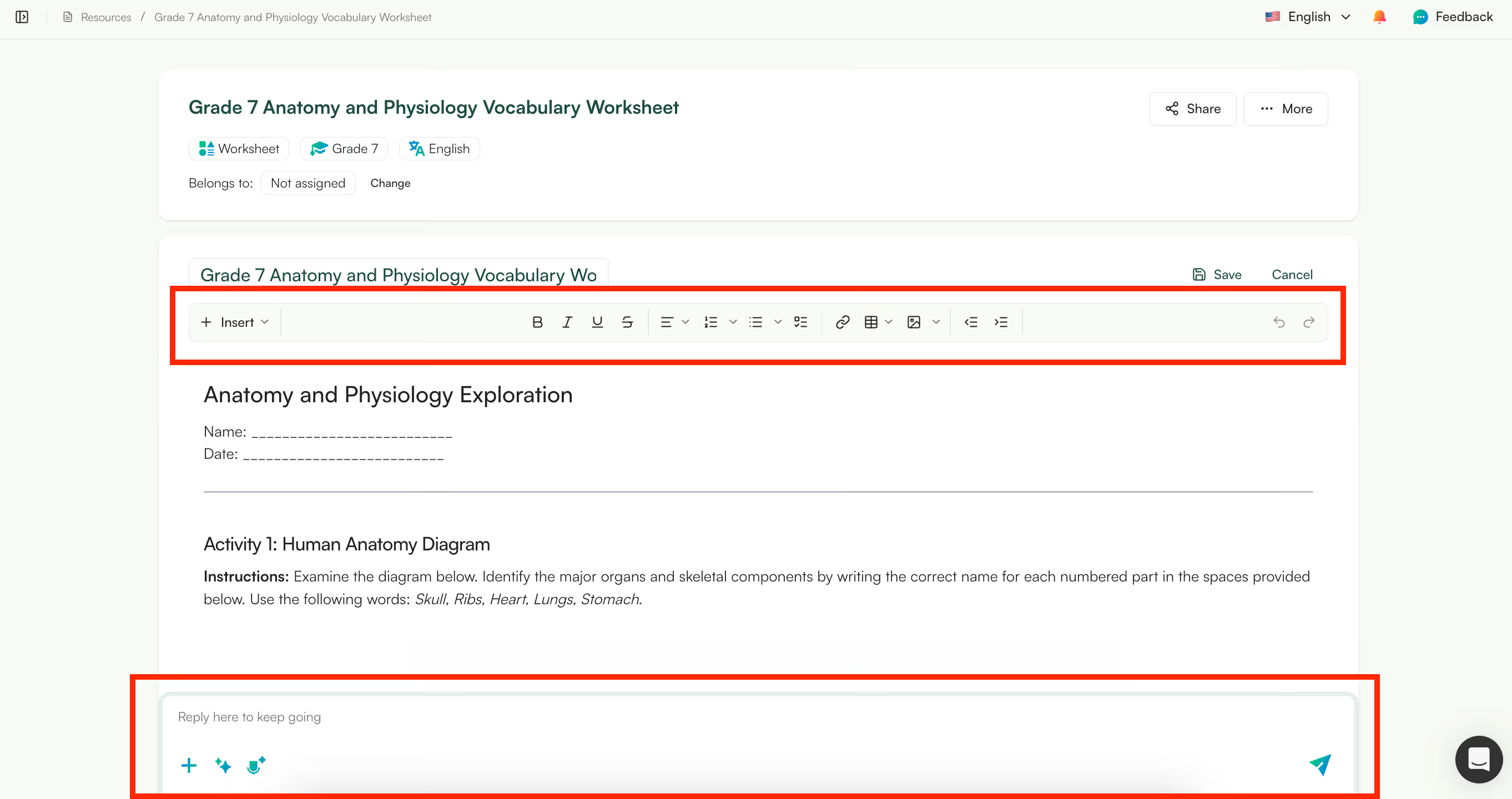
After generating a worksheet, you can modify it inside Monsha’s editor. You can:
This helps when you want to refine examples of vocabulary worksheet activities without recreating the document.
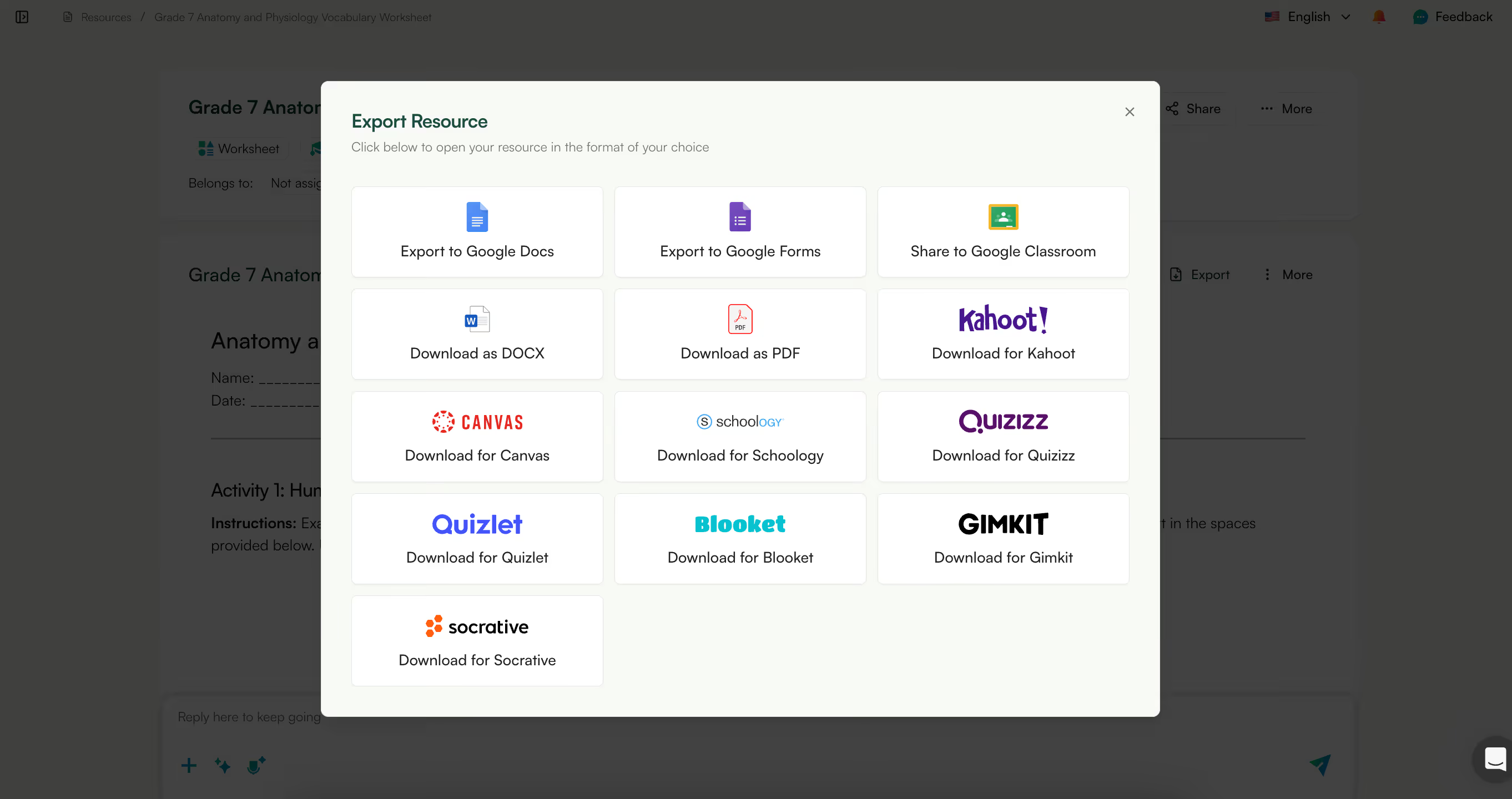
After editing, you can export your worksheet as a vocabulary exercises PDF or send it directly to classroom platforms:
Export options include:
This allows you to turn vocabulary worksheets into assignments or review activities without additional formatting.
If you’re still downloading free vocabulary worksheets and modifying them every time, you’re spending prep time on work that should already be automated.
Monsha lets you create vocabulary worksheets from your own lesson material, adjust difficulty based on your students, refine questions inside the editor, and export a ready-to-use vocabulary worksheets PDF or classroom activity from the same place.
You also don’t have to stop at worksheets, you can turn the same resource into presentations, handouts, and practice activities whenever you need reinforcement material.




AI in Education Content
Pooja Uniyal works closely with teachers and schools to understand and guide how AI is being used in real classrooms today. Her work at Monsha focuses on capturing practical teaching workflows and turning them into clear, usable guidance for educators exploring AI in their daily planning.
Join thousands of educators who use Monsha to plan courses, design units, build lessons, and create classroom-ready materials faster. Monsha brings AI-powered curriculum planning and resource creation into a simple workflow for teachers and schools.
Get started for free

.avif)
.avif)