Explore different types of writing worksheets you can create with Monsha's AI writing worksheet generator. You can use these examples as templates and directly duplicate them in Monsha app.
.avif)
Teaching children how to write can be one of the most rewarding parts of early education but it can also be challenging.
Some students struggle to form letters correctly, others rush through their handwriting, and many lose interest when writing practice feels repetitive.
When students don’t get enough structured practice, it becomes harder for them to develop clear handwriting and confidence in their writing skills.
That’s why the right writing worksheets for kids can make a big difference in your classroom. Well-designed writing worksheets give your students a structured way to practice essential skills - from learning how to practice writing letters with writing alphabet worksheets, to forming complete thoughts using writing sentences worksheets.
In this guide, you’ll find practical examples of such writing worksheets teachers commonly use, including writing letters worksheets, free name tracing worksheets, writing numbers in words worksheets, and cursive writing practice sheets.
Not all writing worksheets for kids work for every age group. A worksheet that helps preschoolers practice writing letters may feel too simple for second graders who are already learning to write sentences. When you choose worksheets based on your students’ writing stage, practice becomes more effective and less frustrating.
The easiest way to pick the right writing worksheets is to match them with the skill students are currently developing.
For example:
You can generate worksheets of all types, for all grades with an AI worksheet generator like Monsha.
What they teach
Alphabet worksheets help children understand how letters are formed and written correctly. At this stage, kids are learning how each letter is constructed through strokes and shapes.
Alphabet writing worksheets builds the muscle memory needed for handwriting while helping children recognize the connection between letters and sounds.
As they trace and write letters repeatedly, they begin to associate written symbols with spoken language, which forms the foundation for reading and spelling later.
Typical worksheet activities
Best for
Here’s an alphabet writing worksheet that you can duplicate in Monsha:
.gif)
What they teach
Name writing worksheets help children learn one of the most meaningful words they’ll ever write - their own name.
Practicing their name gives kids a strong sense of ownership and identity while improving their handwriting skills. Because the letters repeat frequently, students naturally build familiarity with letter shapes, spacing, and sequencing.
Name writing and tracing worksheets also encourages independence, as children begin to label their work, recognize their belongings, and write their name confidently in everyday classroom activities.
Typical worksheet activities
Best for
Here’s an name writing and tracing worksheet that you can duplicate in Monsha:
.gif)
What they teach
Word writing worksheets help children move beyond individual letters and begin writing meaningful words.
At this stage, kids start combining letters to form words, which strengthens both spelling and handwriting. Word and vocabulary writing worksheets often include high-frequency sight words or vocabulary related to classroom themes like animals, colors, or seasons.
As students repeatedly write these words, they develop stronger spelling recognition while improving handwriting fluency.
Typical worksheet activities
Best for
Here’s a word and vocabulary writing worksheet that you can duplicate in Monsha:
.gif)
What they teach
Sentence writing worksheets help children learn how ideas come together to form complete thoughts. Instead of writing isolated words, students practice writing full sentences with correct capitalization, spacing, and punctuation.
This stage strengthens both writing fluency and grammar awareness. As children write sentences repeatedly, they begin to understand how language flows on paper and how words work together to communicate meaning clearly.
Typical worksheet activities
Best for
Here’s a sentence writing worksheet that you can duplicate in Monsha:
.gif)
What they teach
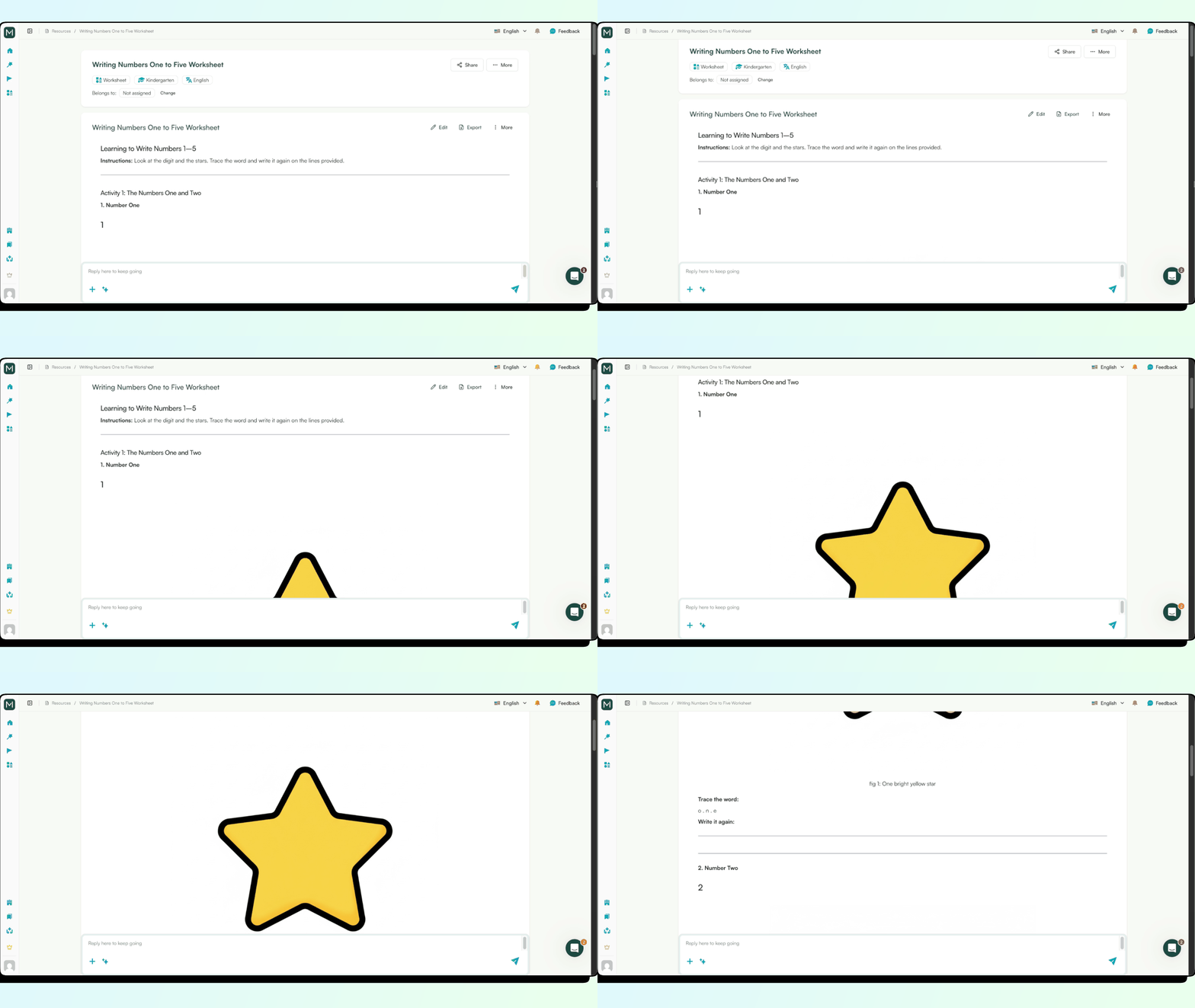
Number writing worksheets help children connect math concepts with language by writing numbers in word form. Instead of only recognizing digits like “3” or “10,” students learn to write them as “three” and “ten.”
This strengthens both spelling and number comprehension. Practicing number words also helps students understand how numbers appear in written language, which becomes important when reading instructions, solving word problems, or writing explanations in math.
Typical worksheet activities
Best for
Here’s a numbers writing in words worksheet that you can duplicate in Monsha:
What they teach
Cursive writing worksheets teach students how to connect letters smoothly to form flowing handwriting. Unlike print writing, cursive requires children to understand how letters transition into one another without lifting the pencil frequently.
Practicing cursive improves writing speed and helps students develop a consistent handwriting style. Many schools introduce cursive after children are comfortable writing letters and words in print.
Typical worksheet activities
Best for
Here’s a cursive writing worksheet that you can duplicate in Monsha:
.gif)
What they teach
Calligraphy worksheets introduce students to decorative handwriting styles where letter formation focuses on visual balance and artistic expression.
While regular handwriting prioritizes readability, calligraphy emphasizes controlled strokes, spacing, and styling. These worksheets help older students develop patience, precision, and fine motor control while experimenting with creative lettering.
Typical worksheet activities
Best for
Here’s an calligraphy handwriting worksheet that you can duplicate this Monsha:
.gif)
Not every worksheet actually helps kids improve their handwriting. Some are too crowded, some don’t give enough writing space, and others skip the practice steps students need to learn properly.
If you want writing worksheets for kids to be effective in the classroom, they should include a few important elements.
Students should immediately understand what they need to do.
For example:
Clear directions make writing sentences worksheets and writing letters worksheets easier for students to complete independently.
A trace → copy → write progression
This structure helps students gradually build confidence.
Good writing worksheets usually follow this pattern:
You’ll often see this progression in abc writing practice worksheets, free name tracing worksheets, and cursive writing practice sheets.
For clearer instruction, you can convert your worksheets into presentations with Monsha.
Young learners need large handwriting lines to practice comfortably.
Crowded worksheets make it difficult for students to form letters properly. Well-designed writing alphabet worksheets or writing name worksheets leave enough room for each attempt.
The words and sentences should match the student’s reading level.
For example:
When worksheets match the student’s ability level, writing practice becomes productive instead of frustrating.
With Monsha, you can differentiate your worksheets and create personalized questions for students with different grades and learning abilities.

For many students, handwriting practice can feel repetitive. The key is to make writing worksheets feel less like a chore and more like an activity they enjoy.
Here are a few ways you can make writing worksheets for kids more engaging in the classroom.
Kids are much more motivated to write when worksheets include familiar topics.
Try creating worksheets around themes like:
For example, a writing worksheet about animals or a vocabulary worksheet about dinosaurs instantly becomes more interesting.
Instead of simply assigning a worksheet, you can add a small goal.
For example:
Small challenges make practice writing letters or completing abc writing practice worksheets feel like a game.
Pictures help younger students understand what they are writing about.
Many effective writing alphabet worksheets and writing numbers in words worksheets include small images to support learning. A picture of three apples next to the word three helps students connect the number with the word they are writing and they can also learn to speak those words simultaneously.
Students are more engaged when the worksheet includes something personal.
For example:
Personalization makes handwriting practice feel more meaningful.
Rotating worksheet styles keeps writing practice fresh.
You might use:
This variety prevents students from getting bored while still strengthening their handwriting skills.
Throughout this guide, you saw examples of different types of writing worksheets you can use in the classroom. Each type of worksheet focuses on a different stage of writing development, helping your students gradually move from letter formation to writing words, sentences, and eventually fluent handwriting.
Instead of creating these worksheets manually, you can generate all of them instantly with Monsha.
With Monsha, you can customize the content, generate cursive writing worksheets PDF, create free name tracing worksheets, or design composing sentences worksheets tailored to your classroom needs.
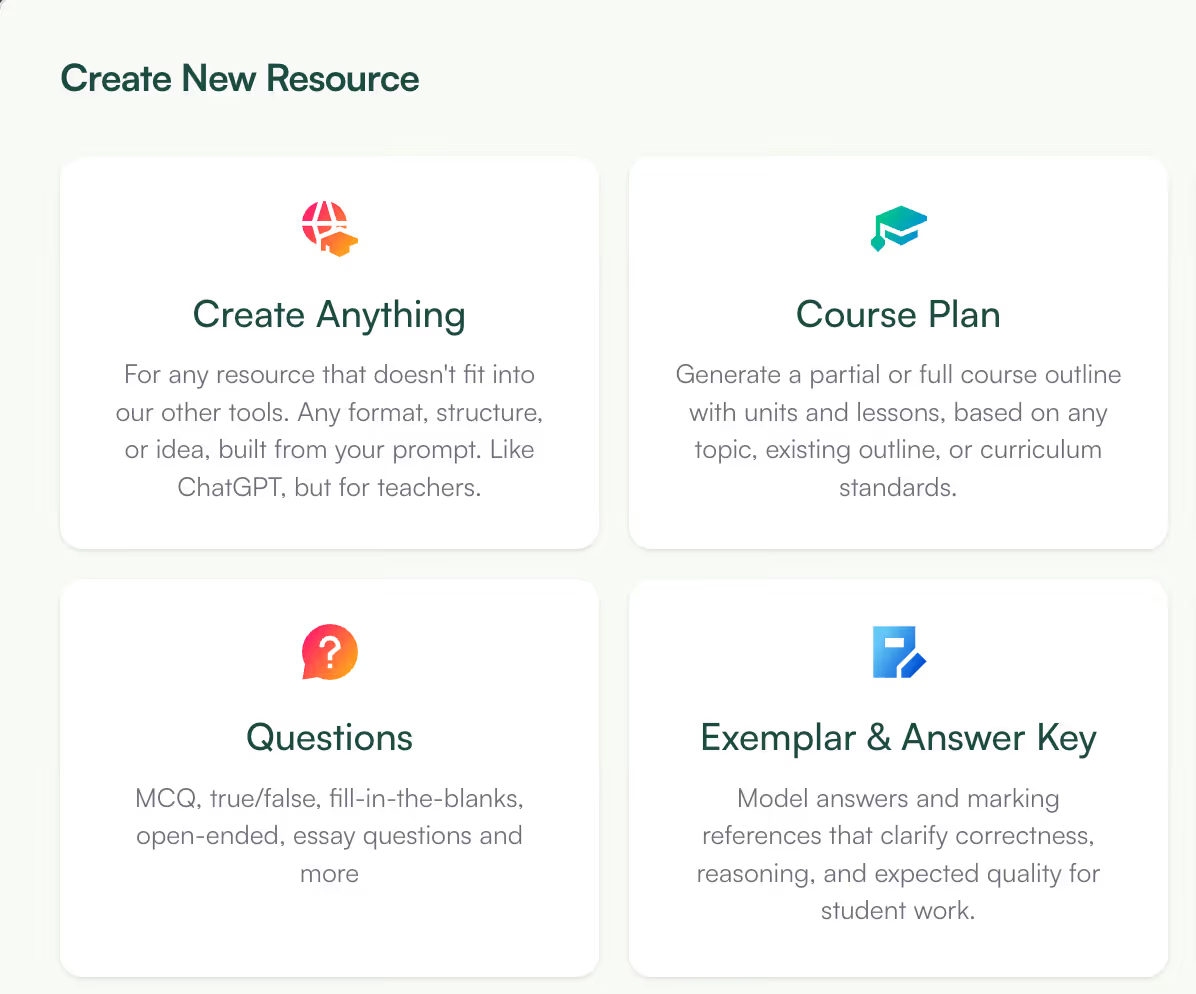
And Monsha goes beyond just creating worksheets. Once you generate a worksheet, you can easily convert it into other teaching resources - like slides, classroom activities, or additional practice materials - so one idea can turn into multiple learning resources for your students.
If you want a faster way to create engaging writing worksheets for kids while saving time on lesson preparation, Monsha gives you everything you need to generate, customize, and expand your writing practice resources, all in one place.




AI in Education Content
Pooja Uniyal works closely with teachers and schools to understand and guide how AI is being used in real classrooms today. Her work at Monsha focuses on capturing practical teaching workflows and turning them into clear, usable guidance for educators exploring AI in their daily planning.
Join thousands of educators who use Monsha to plan courses, design units, build lessons, and create classroom-ready materials faster. Monsha brings AI-powered curriculum planning and resource creation into a simple workflow for teachers and schools.
Get started for free

.avif)
.avif)
.avif)