This guide shows teachers how to create differentiated worksheets with AI and adapt them for different grades, reading levels, and learning needs. Learn practical strategies and see how AI tools help you differentiate faster without rewriting worksheets.
.avif)
You’re teaching one topic, but your class isn’t at one level.
Some students finish early. Some struggle to start. Others understand the idea but get stuck because of language or reading level. And yet, you’re still expected to use the same worksheet for everyone.
This is exactly where differentiated worksheets help.
In this blog, you’ll see:
If you want a way to start with one worksheet and adjust it for different grades, reading levels, and thinking skills, this guide walks you through how to do that, step by step.
Try it now — no need to switch tabs
Describe your worksheet topic below, pick your activity types and grade, and Monsha will build it for you in seconds.
Differentiation in education means adjusting how learning is presented so all students can access the same goal, even if they don’t all get there in the same way.
In a real classroom, you’re rarely teaching students who are at the same level. Some need more support, some need more challenges, and some need a different way in. Differentiation helps you account for that without changing your learning objective.
At a practical level, differentiation usually happens across three areas:
The goal is to adjust access, complexity, and cognitive demand so more students can succeed using the same resources.
When you think about differentiation, it usually shows up in the resources you use every day, not in special projects or once-a-term activities. You’re most often differentiating things like:
Among these, worksheets are the most commonly differentiated resource.
You use them regularly, sometimes in every class. They’re easy to adjust for different levels, and they work well for practice, revision, homework, and quick assessments. A single worksheet can also be reused across groups or exported as differentiated worksheets PDFs for print or digital use.
Here are the top strategies that teachers actually use to differentiate resources:
This strategy originates from Carol Ann Tomlinson’s Differentiated Instruction framework, widely used in teacher education programs and professional development. Tomlinson identifies readiness as one of the core drivers of differentiation.
You create multiple versions of the same worksheet based on how prepared students are to work with the concept.
The topic and learning goal stay the same. Only the level of complexity changes.
This is the most common and accepted way teachers create differentiated worksheets in real classrooms.
This strategy is grounded in Webb’s Depth of Knowledge (DOK) framework, which is used by curriculum designers, assessment boards, and state education systems.
You change how deeply students think, not what they’re learning.
A single worksheet can include:
This allows you to differentiate worksheets without “dumbing down” content - something many teachers worry about.
This approach is supported by Universal Design for Learning (UDL) guidelines and literacy intervention research, especially for multilingual and inclusive classrooms.
You adjust:
This is critical when students struggle due to language barriers, not lack of understanding. Many differentiated worksheets PDFs already use this strategy - often without labeling it as differentiation.
This strategy is based on Vygotsky’s Zone of Proximal Development (ZPD) and the Gradual Release of Responsibility model used in instructional design.
You change how much guidance is built into the worksheet.
Examples include:
Some students need structure to begin. Others don’t. Differentiated worksheets allow you to adjust support without creating entirely new activities.
This is known as product differentiation in Tomlinson’s framework and is widely used in formative assessment practices.
Students show understanding in different ways, such as:
This strategy is especially useful when designing differentiated quizzes alongside worksheets, since it maintains consistent learning goals while offering flexibility.
Pacing differentiation is commonly used in MTSS (Multi-Tiered Systems of Support) and RTI (Response to Intervention) models.
You adjust:
All students work toward the same objective but at a pace that supports learning rather than frustration or boredom.

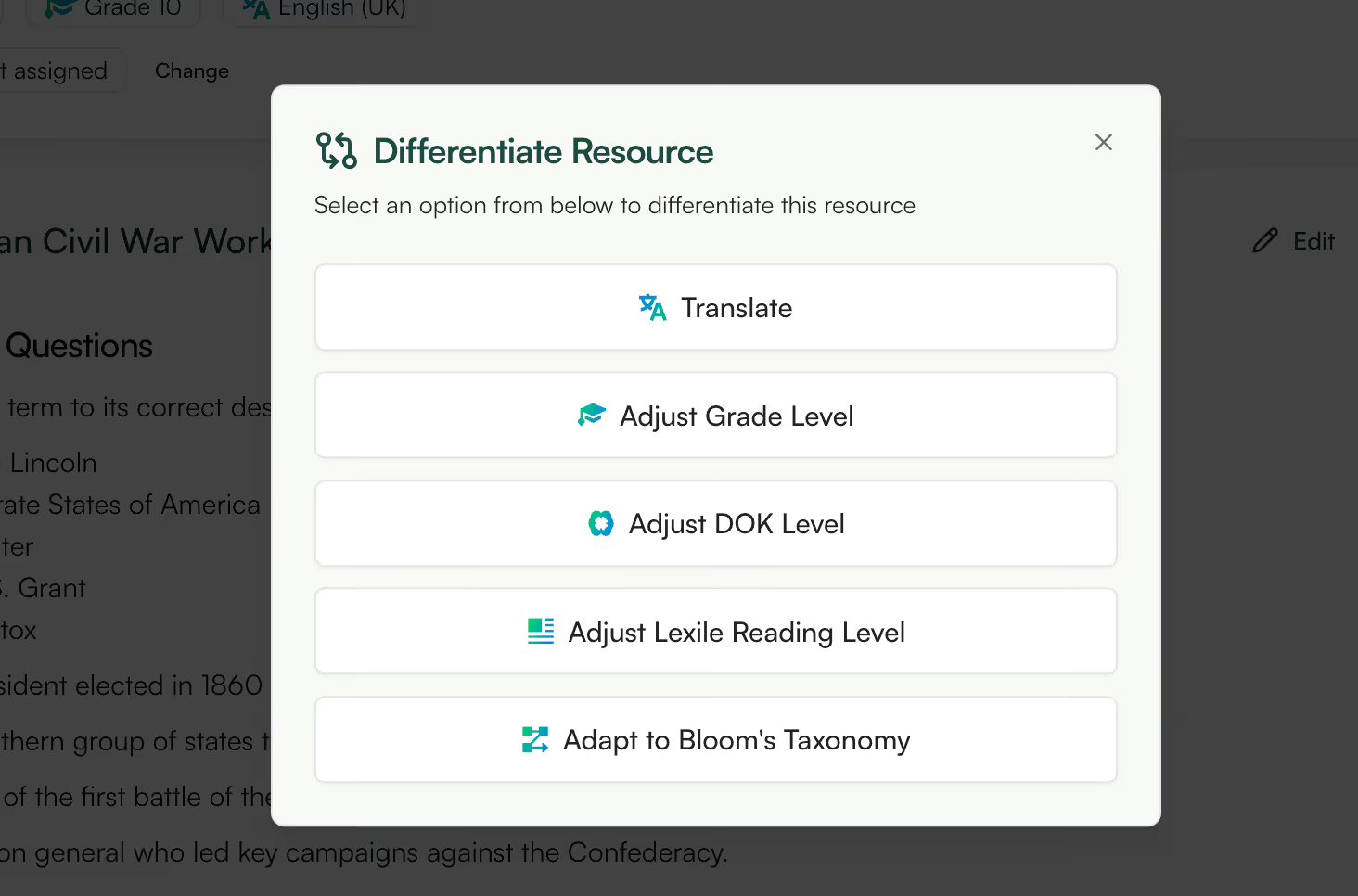
With Monsha, the workflow is intentionally simple:
You begin by generating a worksheet using any teaching input you already have, such as:
Monsha turns this into a classroom-ready worksheet with structured questions and an answer key. This base worksheet becomes your single source of truth.
Once your worksheet is created, Monsha lets you differentiate that exact resource across multiple dimensions.
Instead of copying, editing, and reformatting files, you:
You can differentiate worksheets by:
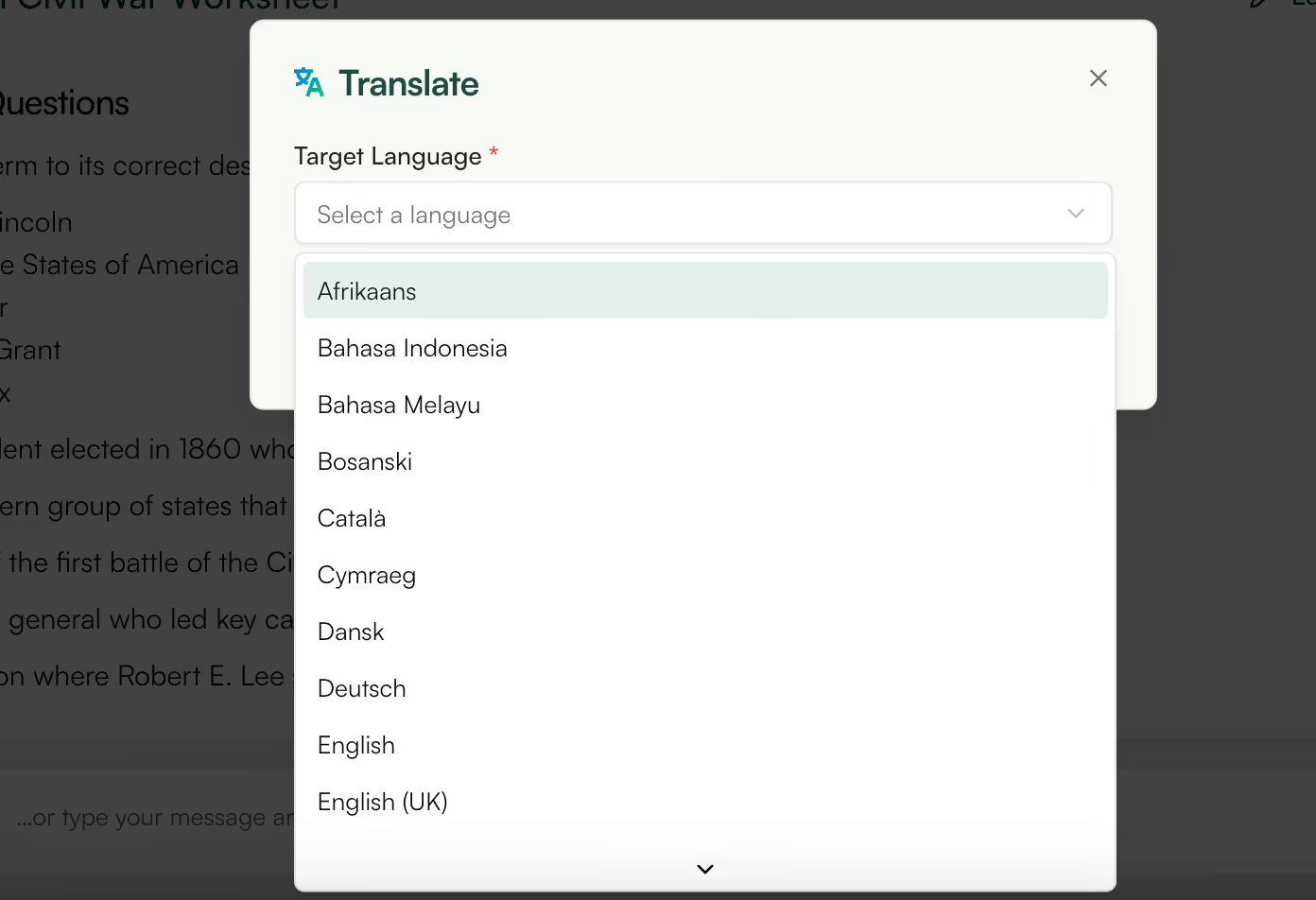
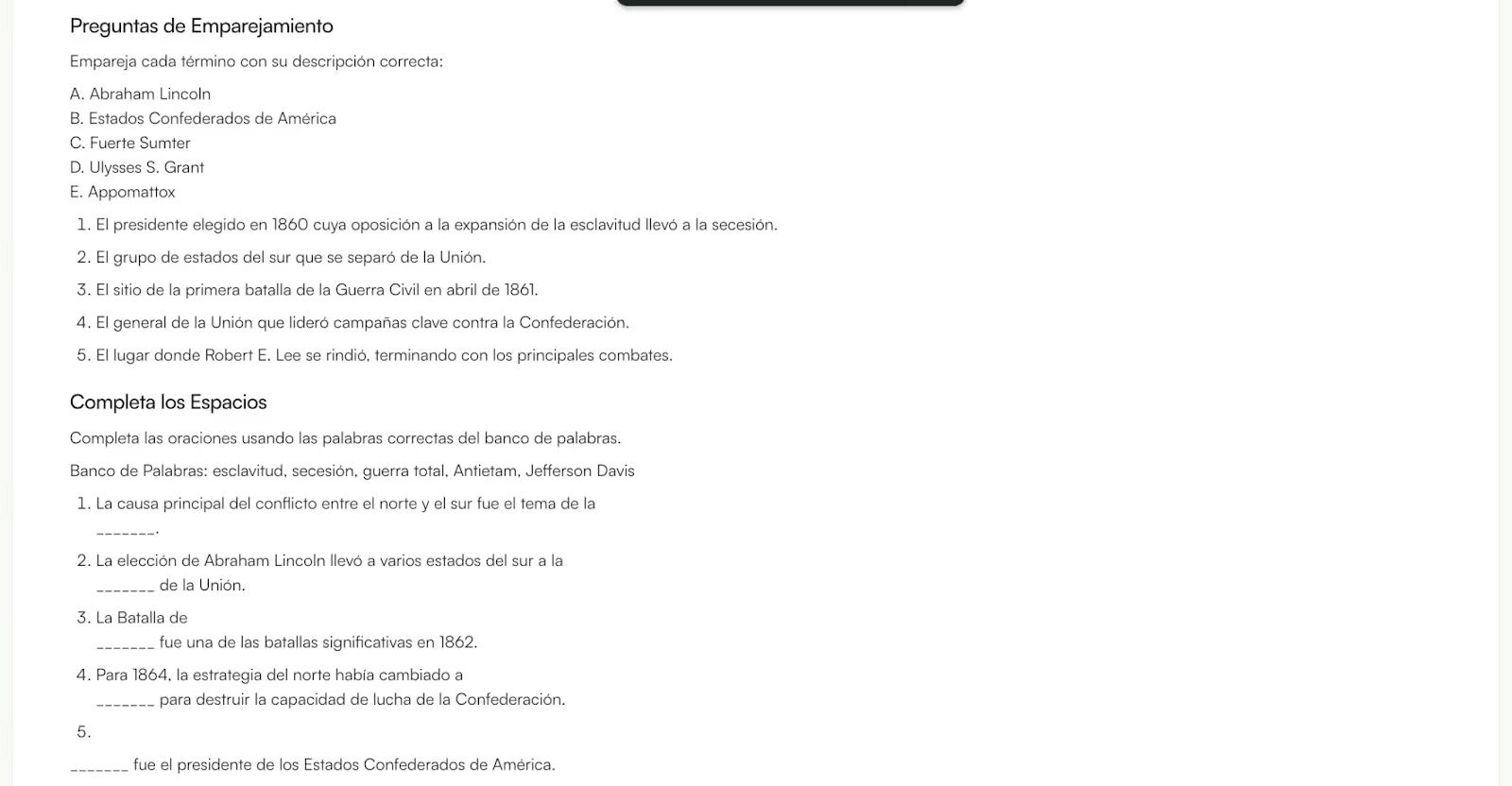
Translating the worksheet content into multiple languages is super useful in classes with diverse group of students.
You can create the same worksheet in English and another language so the bilingual or multilingual students have multiple options.
Here is the same worksheet differentiated in Monsha based on language. One is in English and the other is in Espanol:
In subjects like Mathematics, Physics, and Chemistry, the core concepts don’t change - the level does.
Topics like trigonometry or thermodynamics appear across multiple grades, but each time they’re taught with greater depth and complexity.
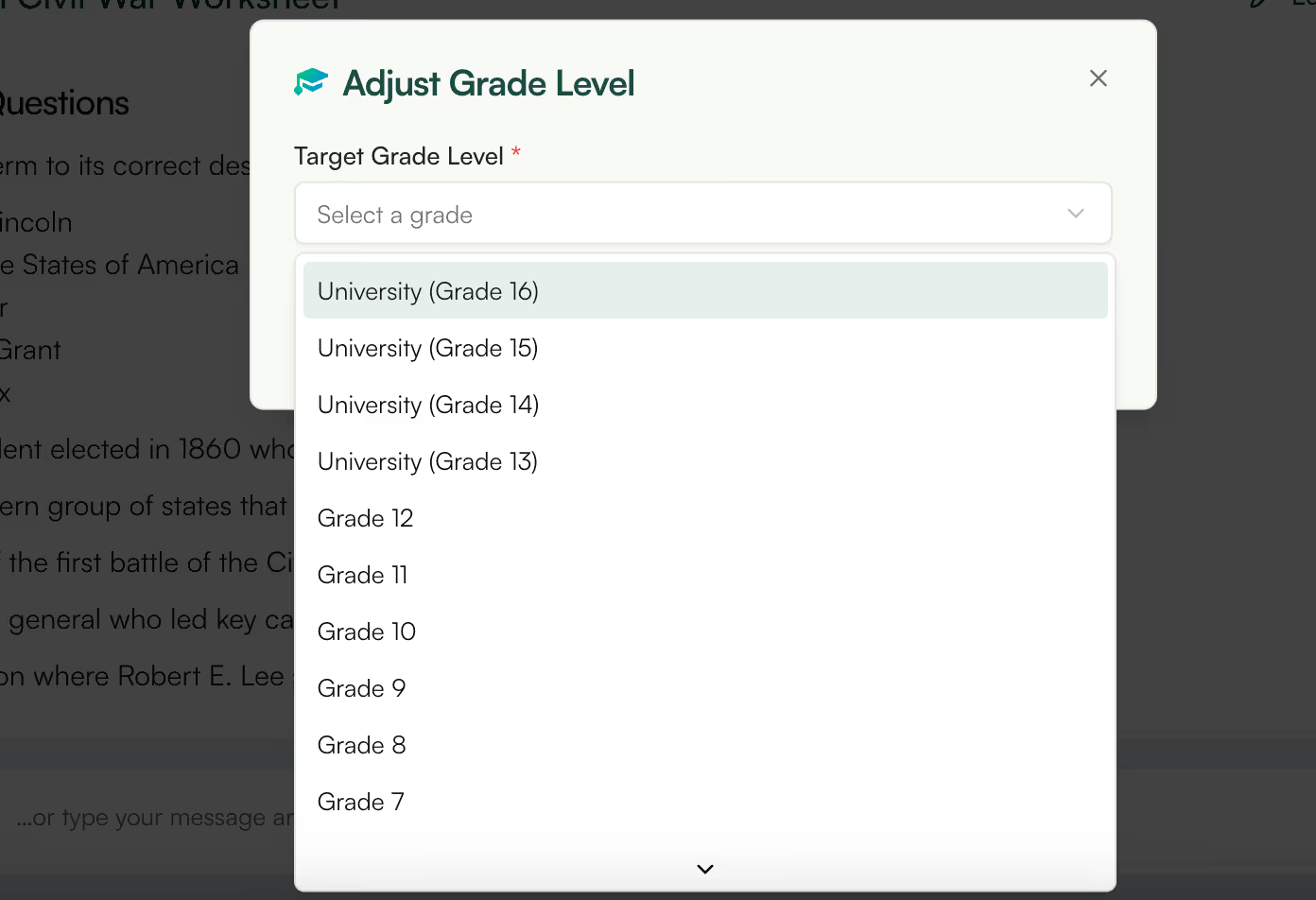
This is where grade-level differentiation becomes especially useful.
Once you create a base worksheet for a topic, you don’t need to start over for every class. You can simply increase or decrease the complexity based on the grade you’re teaching - simpler questions for lower grades, deeper problem-solving for higher grades.
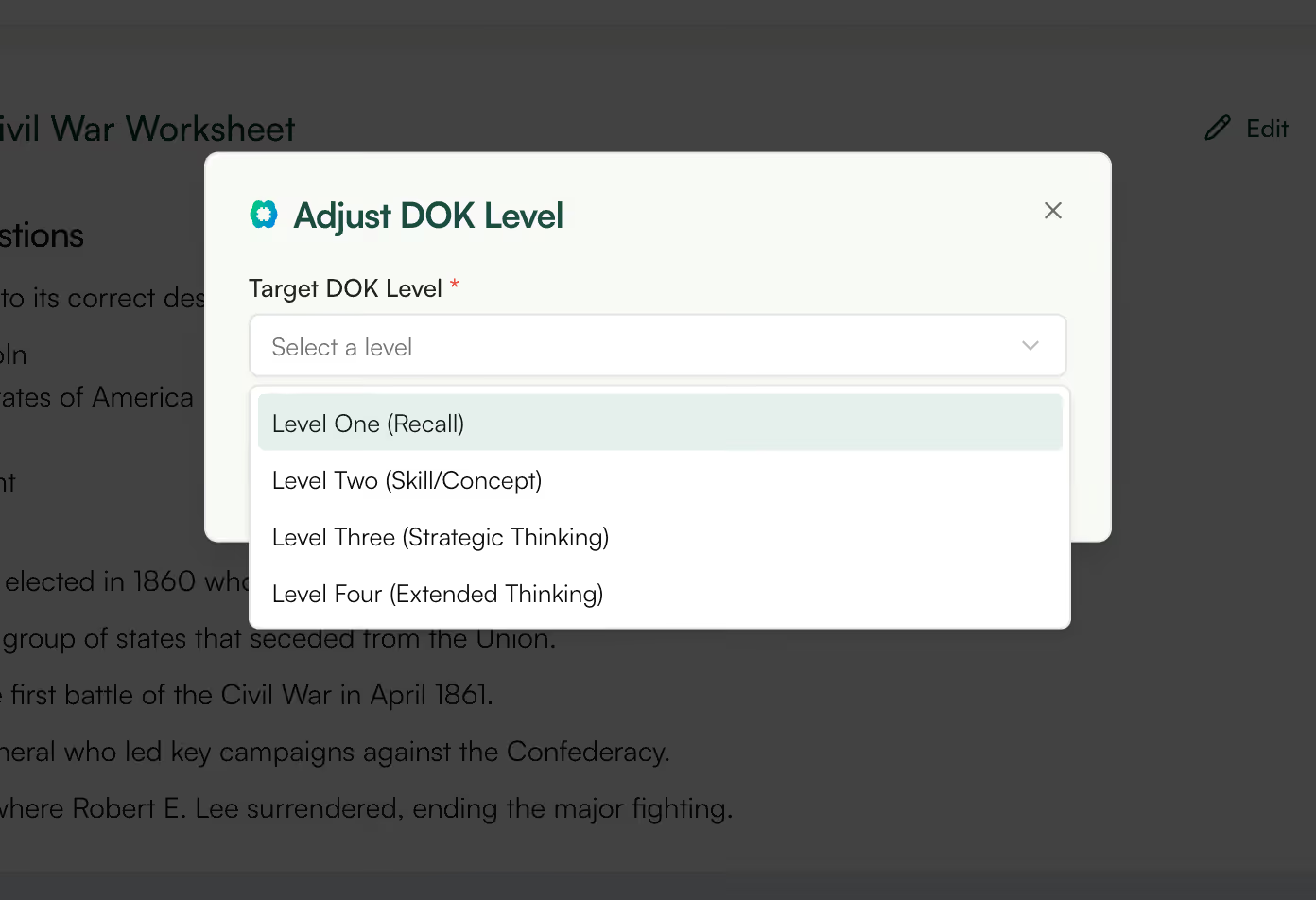
DOK is about how much thinking a question requires, not how long or difficult it looks.
For example, here’s the same topic: Photosynthesis
You’re teaching the same concept but each DOK level pushes students to think harder.
This is useful when:
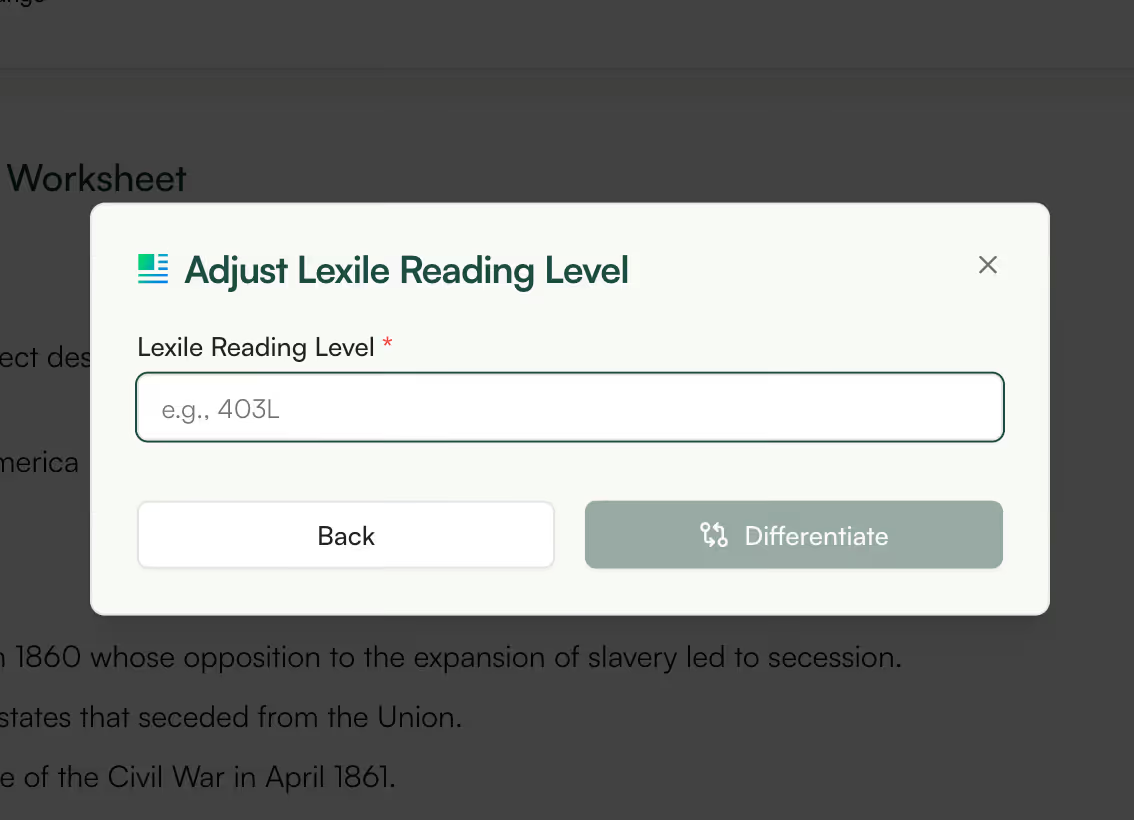
Many students struggle with reading comprehension and questions more than the actual questions.
For example, here’s a complex text:
“Industrialization resulted in significant socioeconomic transformations across urban populations.”
Now here’s the simplified version adjusted to Lexile reading level:
“Industrialization changed how people lived and worked in cities.”
The question stays the same, only the reading load changes.
This helps students:
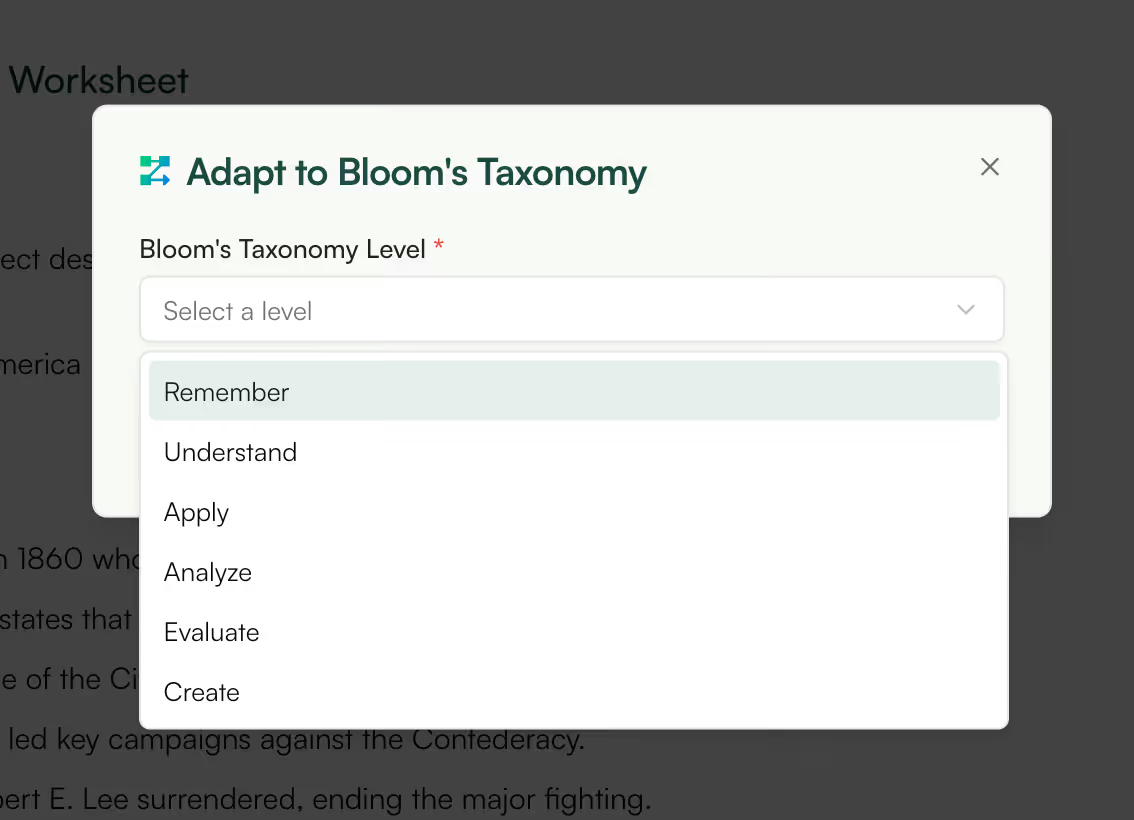
Sometimes, when you give students a worksheet, you have more than one goal in mind. You want to see:
Can they actually use what they learned?
Can they explain their thinking?
Can they go beyond what was taught?
That’s where Bloom’s Taxonomy comes in. It helps you decide what kind of thinking your worksheet should focus on.
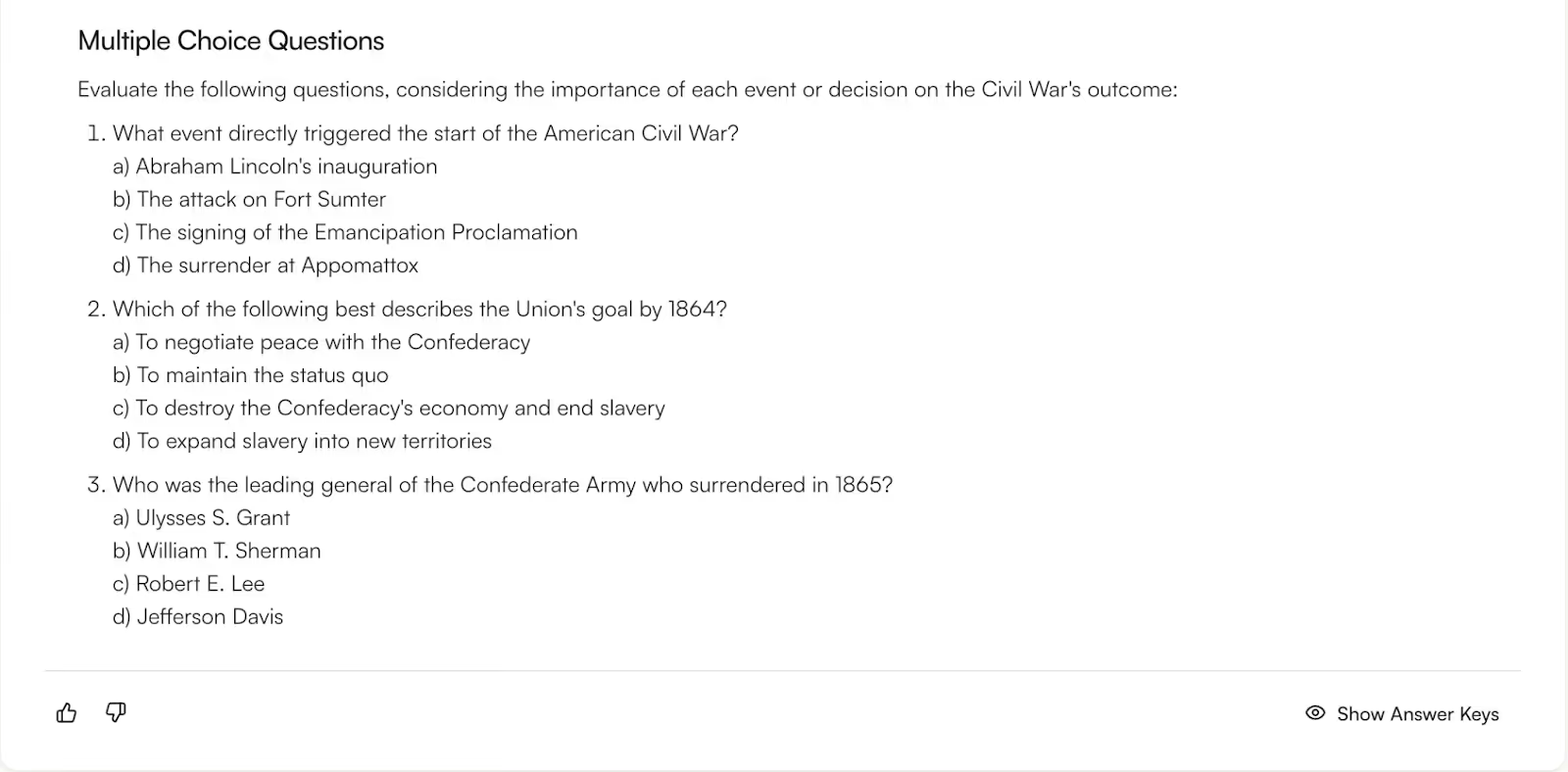
For example, you use the same reading passage, but change the questions based on what you want to check:
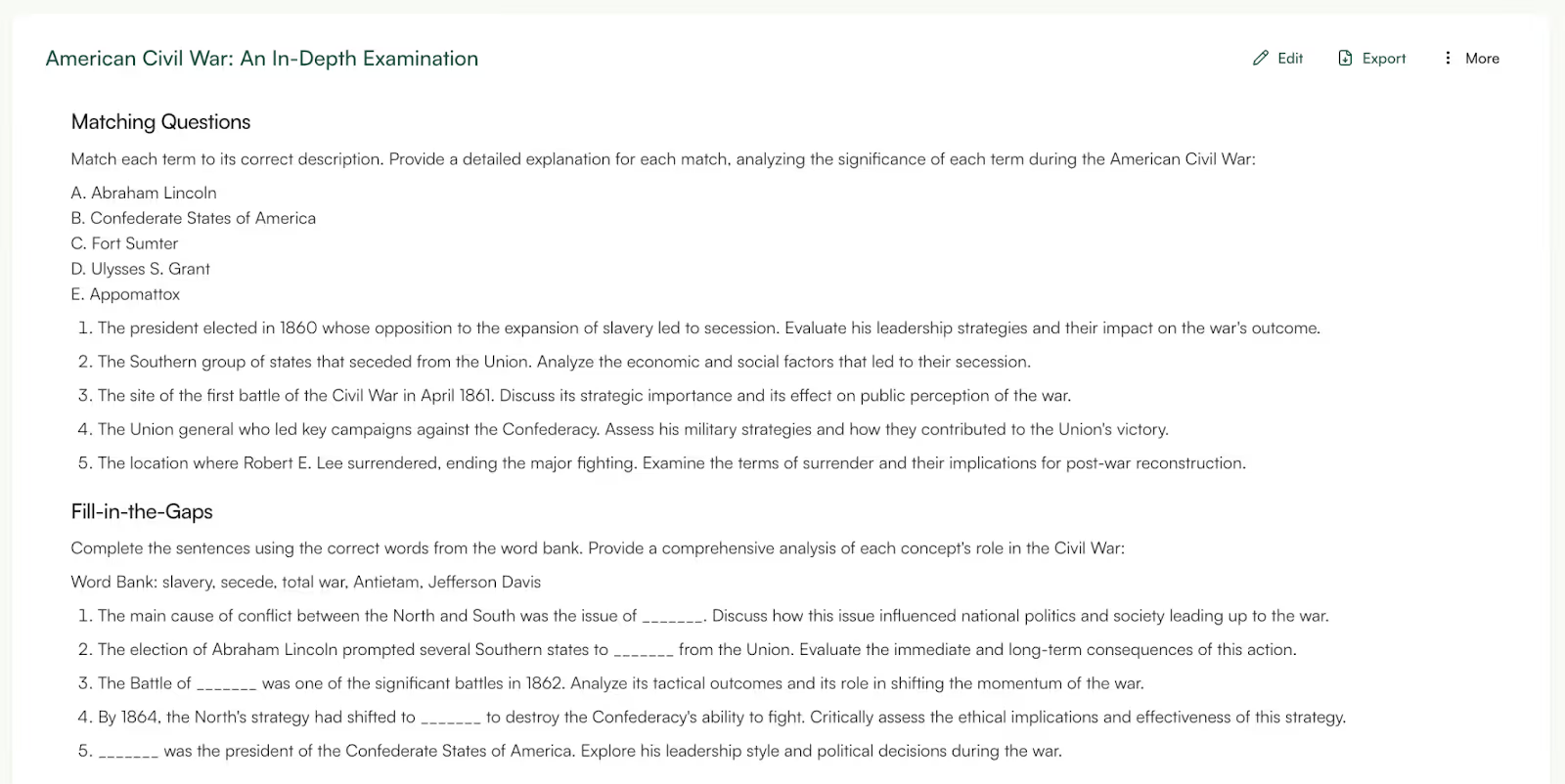
Here’s a worksheet example created in Monsha where the teachers wants student to evaluate questions before giving an answer:
Differentiation doesn’t require completely new lessons or endless versions of the same worksheet. Most of the time, it comes down to how you adapt one resource for the students in front of you.
Worksheets are a practical place to start because they’re used often, easy to adjust, and work across practice, assessment, and revision. When you combine proven differentiation strategies - like adjusting grade level, reading load, or cognitive depth - you can support more students without adding more work.
Tools like Monsha make this process faster by letting you create a worksheet once and differentiate it in multiple ways, instead of rebuilding everything from scratch.
Whether you’re teaching mixed-ability classes, multilingual learners, or students who need more challenge, the goal stays the same: make learning accessible without lowering expectations.
Start small. Differentiate one worksheet. Once you see how much time that saves, it becomes much easier to make differentiation part of your everyday teaching.
.avif)




AI in Education Content
Pooja Uniyal works closely with teachers and schools to understand and guide how AI is being used in real classrooms today. Her work at Monsha focuses on capturing practical teaching workflows and turning them into clear, usable guidance for educators exploring AI in their daily planning.
Join thousands of educators who use Monsha to plan courses, design units, build lessons, and create classroom-ready materials faster. Monsha brings AI-powered curriculum planning and resource creation into a simple workflow for teachers and schools.
Get started for free

.avif)
.avif)
.avif)