Discover the top methods to create PowerPoint presentation or Google Slides based on YouTube videos, with and without using ChatGPT, Claude, Copilot or other AI for teachers.
So you got inspired by a video and you want to convert and create a presentation from a YouTube video. Well it can take hours if you watch the video, then manually take screenshots, write content for the presentation and design it to suit your aesthetic.
You pause the video or rewind it because you missed a point. Before you know it, three hours are gone and you’re still staring at a half-finished deck.
That’s where AI presentation makers step in. They let you create a presentation from a YouTube video using AI.
In this blog, you’ll learn two easy ways:
By the end, you’ll know exactly how to generate presentations automatically and then edit and export your deck to PowerPoint or Google Slides
Teachers already use YouTube to explain new topics, show demonstrations, or make lessons more engaging. But when it comes to actually using that content in the classroom, videos alone aren’t practical.
Turning a YouTube video into a PowerPoint (YouTube to PPT) or AI-generated slides solves three major challenges teachers face daily.
Instead of manually summarizing a 30-minute Youtube video, AI presentation tools like Monsha can extract the key points and generate ready-to-teach slides, complete with headings, sub-points, and structure.
Some YouTube videos are brilliant for teaching but they move fast, include too much detail, or lose students midway. By converting those Youtube videos into slides, you can control the pace and break each concept into digestible visuals and bullet points.
For example:
Sometimes, classrooms don’t have a stable internet connection or audio setup for streaming videos.
By turning YouTube videos into PowerPoint slides (YouTube to PPT), you can bring the lesson offline - no buffering, no volume issues, no distractions.
Best for: Teachers who want instant, visually structured slides without typing a single word.
Open Monsha’s AI presentation maker and paste your YouTube link into the input box.
You can choose an educational video with clear narration or captions.
For example, here a teacher has chosen a video on thermodynamics while she was teaching this topic in the classroom.
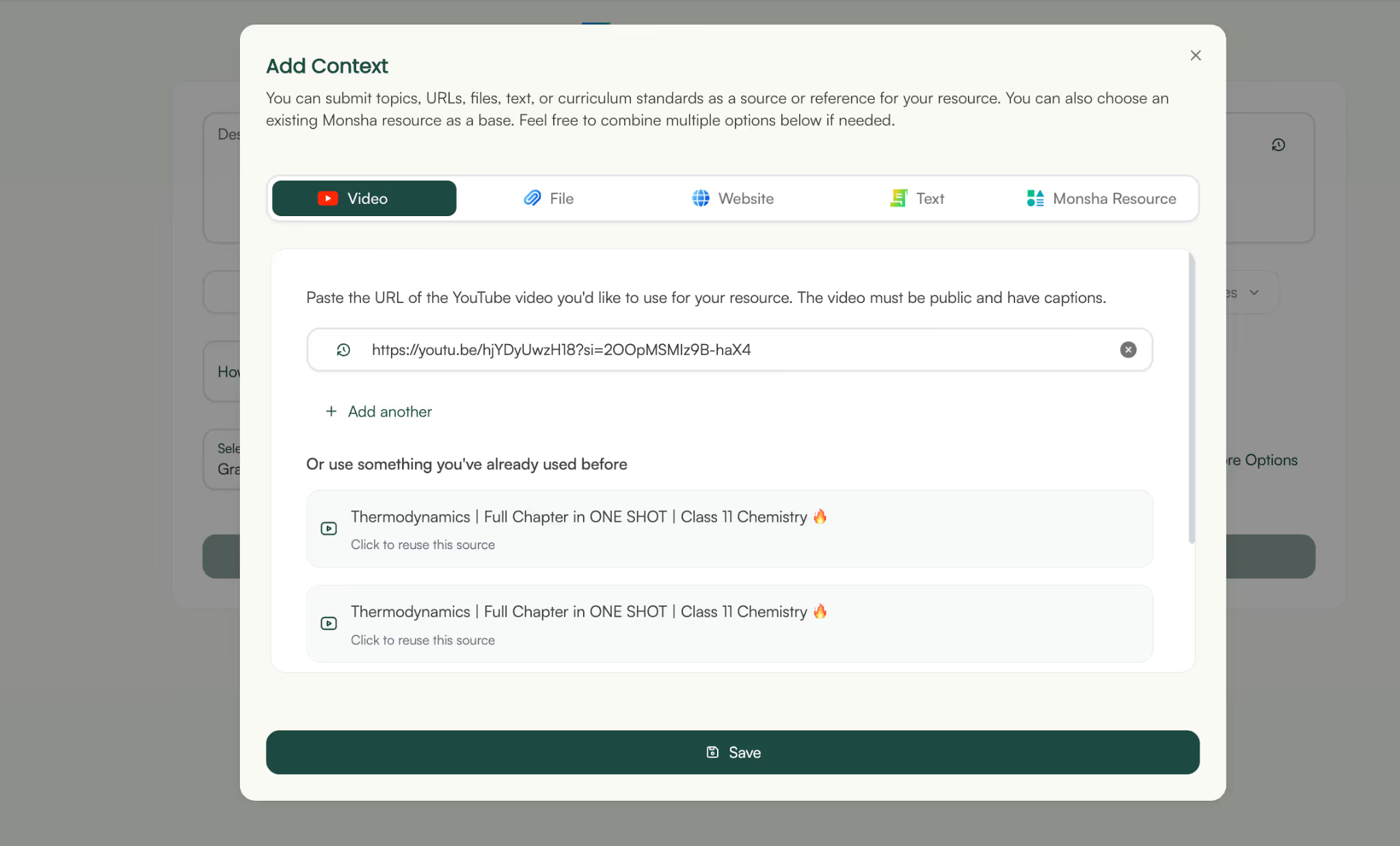
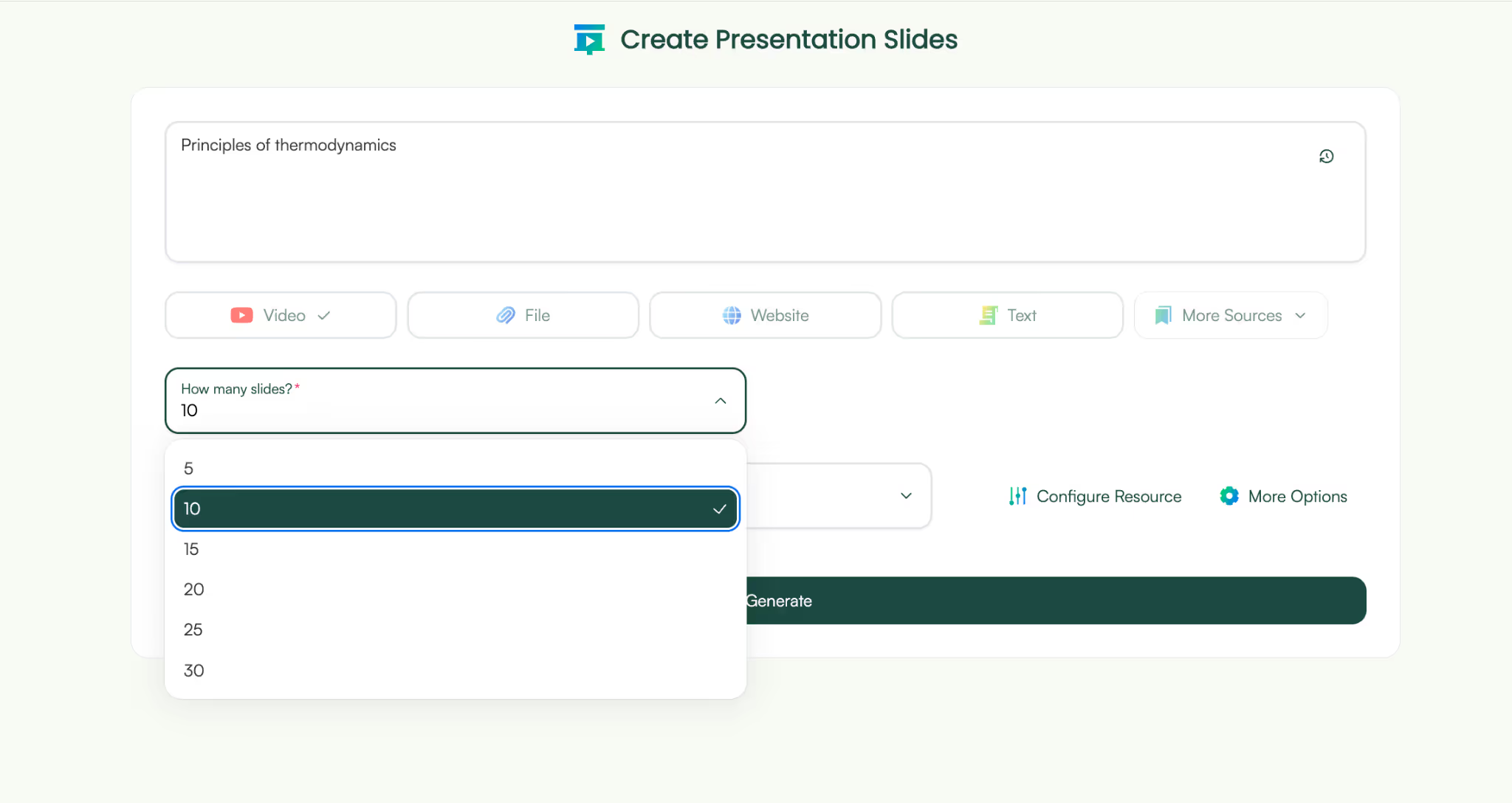
Monsha gives you the option to select the number of slides, language and grade level so you can customize the presentation to meet your students.
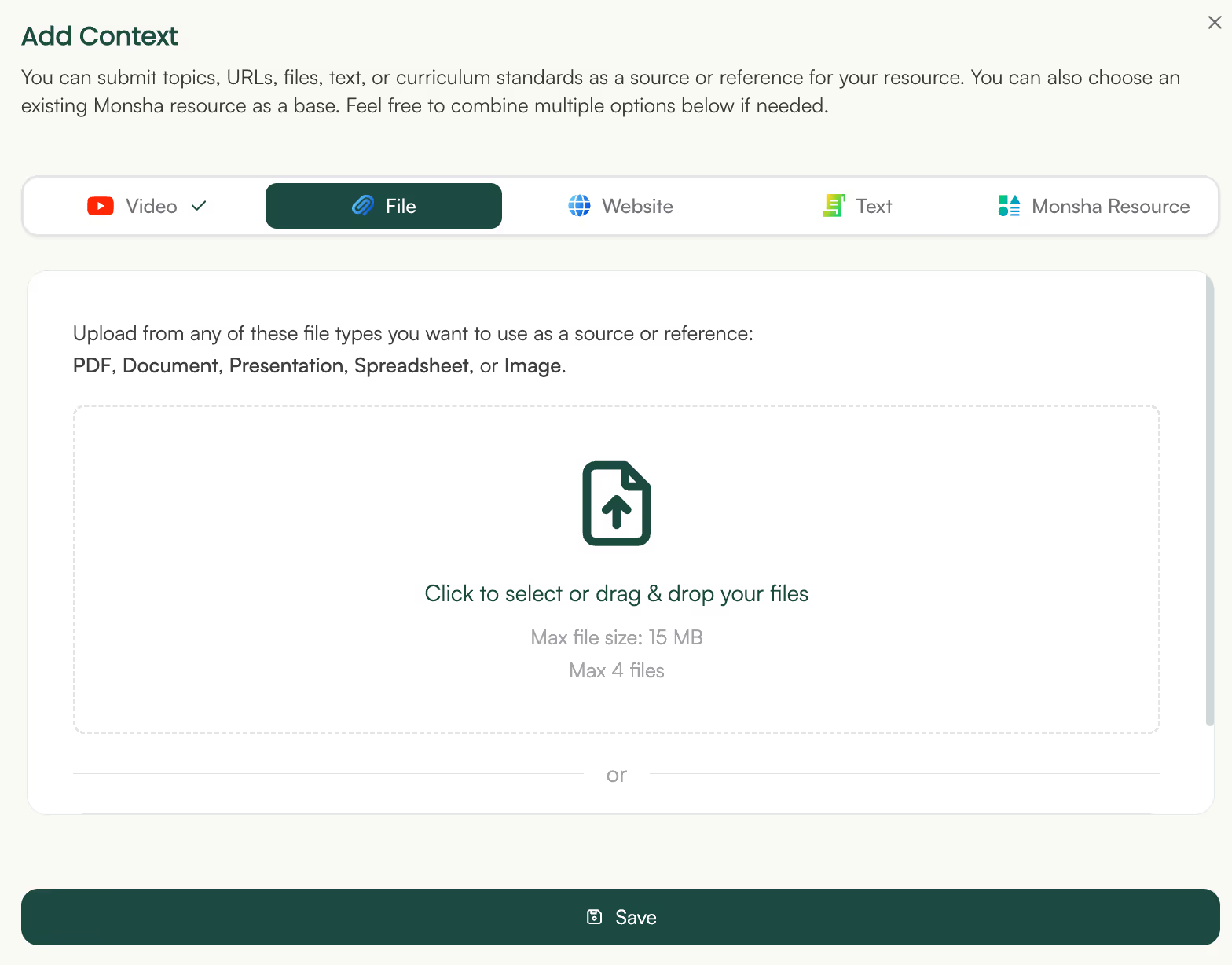
You can add any diagrams or other images from your school textbooks to maintain your school brand.
If you skip this, Monsha presentation makers will automatically add some visual elements to the presentation which you can keep or remove.
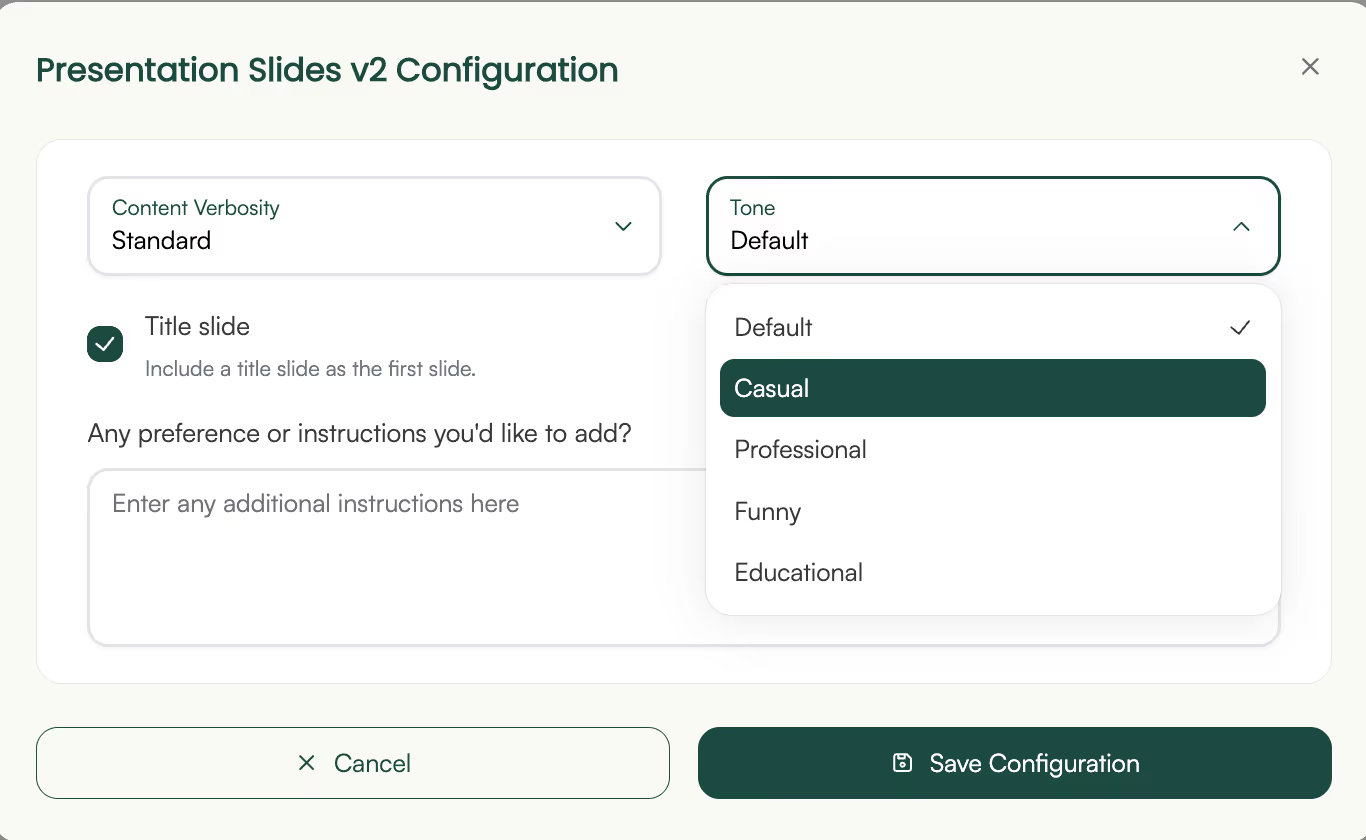
You can add more customizations like tone of the presentation and any additional pointers you’d like to add.
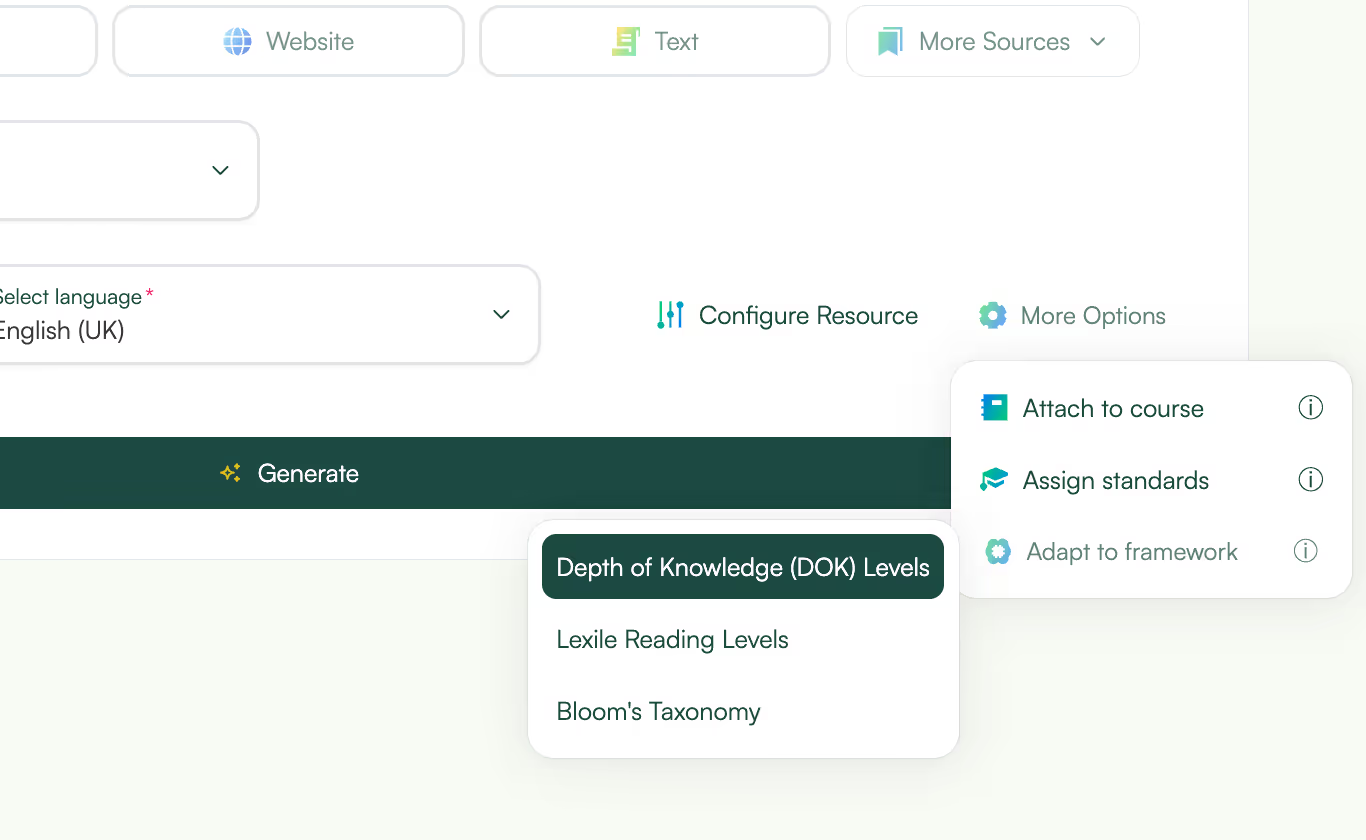
You can also assign a DOK level, Bloom’s Taxonomy level, or Lexile reading level to adapt your slide content.
When you click on “generate”, Monsha’s AI will extract the transcript, identify key ideas, and create a presentation outline for you.
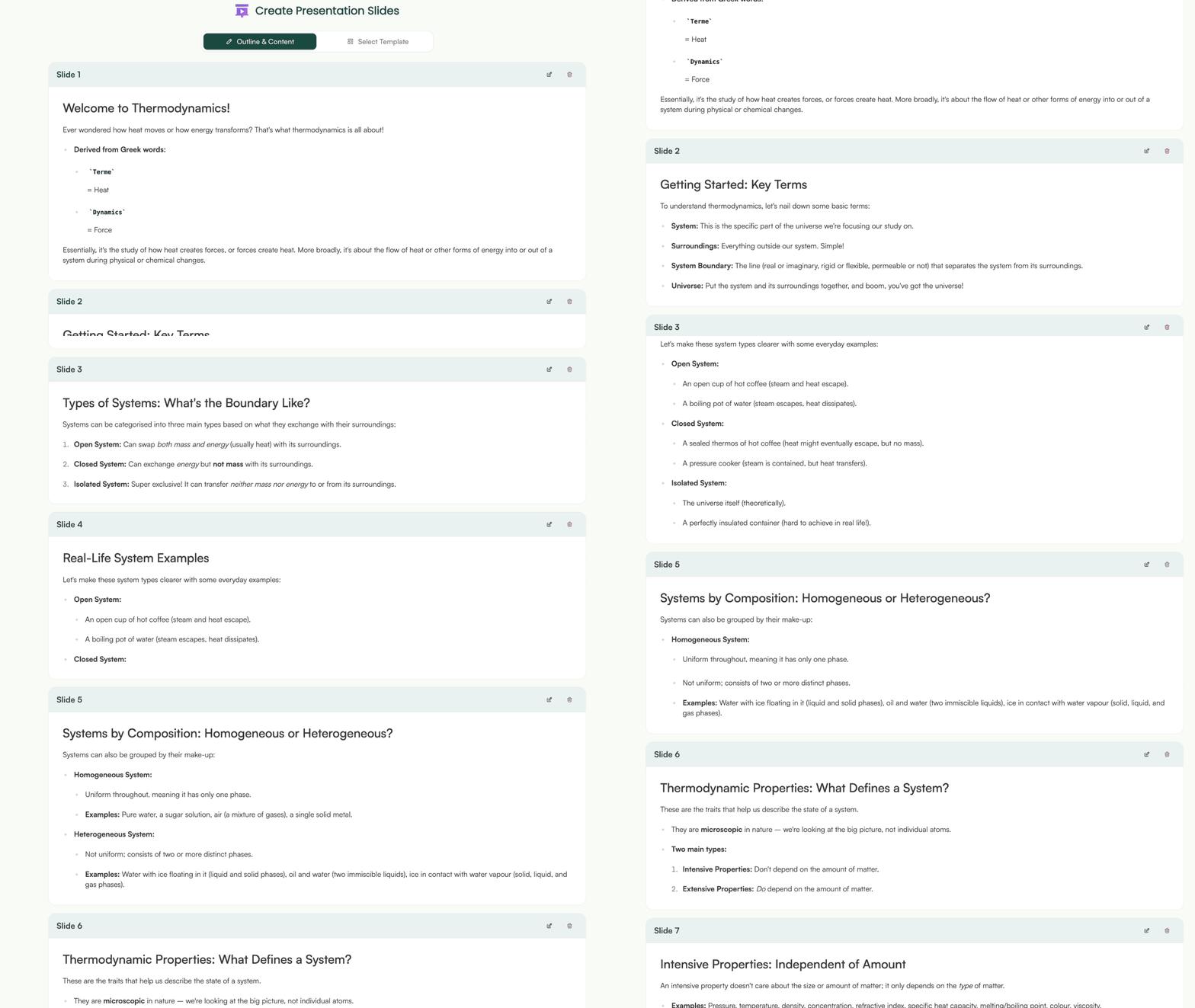
You can edit the text, change templates, and even tweak images in the PPT simply by writing a prompt.
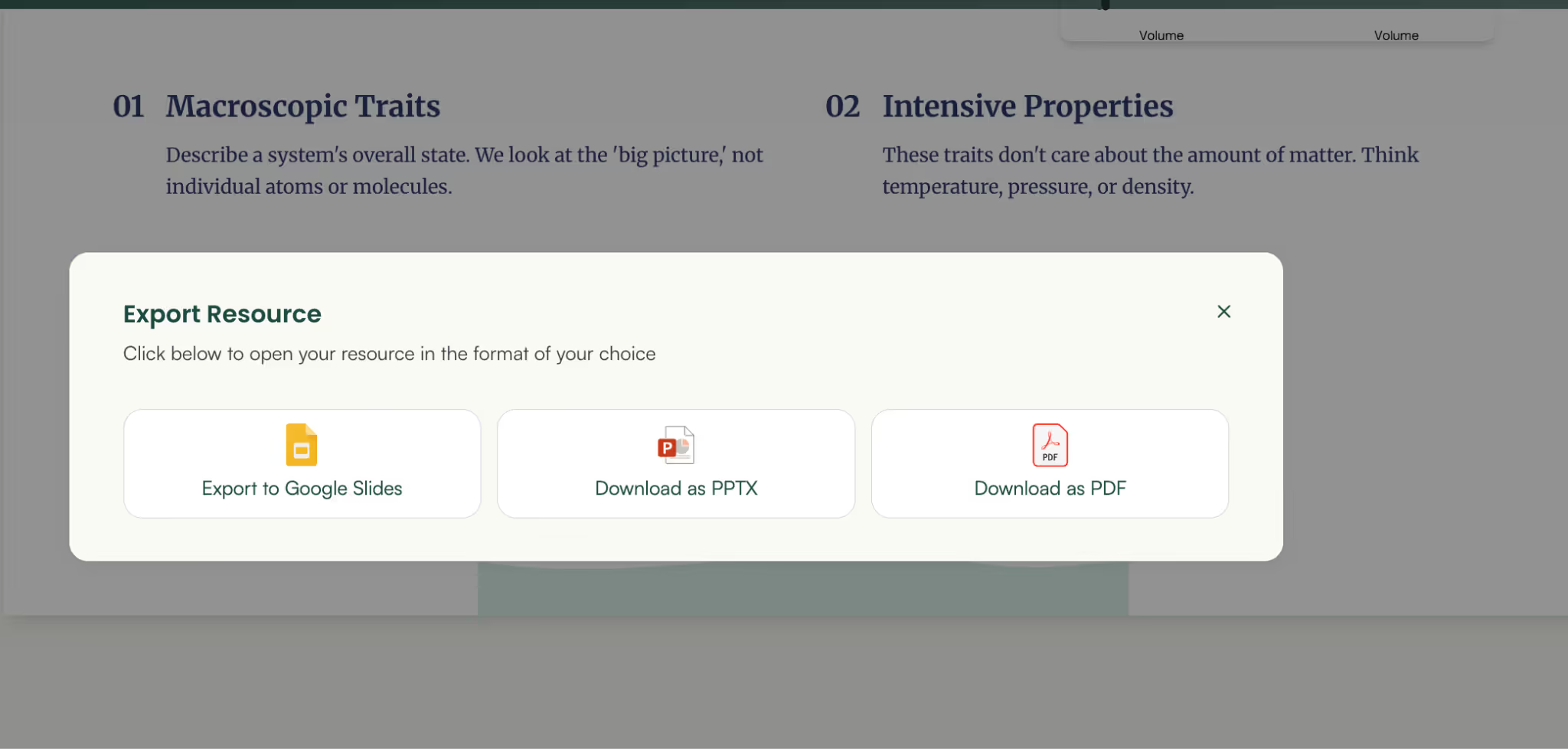
Monsha lets you export your powerpoint presentation to Google Slides, as PPTX and PDF so you can present it in the classroom or share as PDF.
If you prefer more control over your lessons, you can also create a presentation from a YouTube video using AI inside ChatGPT-5 or 5.1.
This approach works well for teachers who want to go the extra mile to handcraft each slide, decide what to include, how to explain it, and how to adapt the tone for different grade levels.
However, unlike Monsha, this process takes a few more steps and manual edits before your deck is classroom-ready.
First, sign in to your ChatGPT console and make sure you’ve selected the GPT-5 (or 5.1) model.
There’s no single way to approach this, but a good first step is to ask ChatGPT to generate slide titles and an outline for the presentation. This helps you visualize the overall structure before filling in the details.
Prompt: “You are an expert teacher and educator, skilled at creating effective and detailed resources for your students. Based on the content of the YouTube video provided below, generate slide titles and an outline for a 10-slide presentation on Thermodynamics for Grade 7.
YouTube video: [insert_video_link_here]”
Specify how much detail you want and match the students’ comprehension level.
Prompt: For each slide in the outline, generate 3-4 bullet points summarizing the main ideas. Keep the language simple for Grade 7 students.
You may get an outline like this:
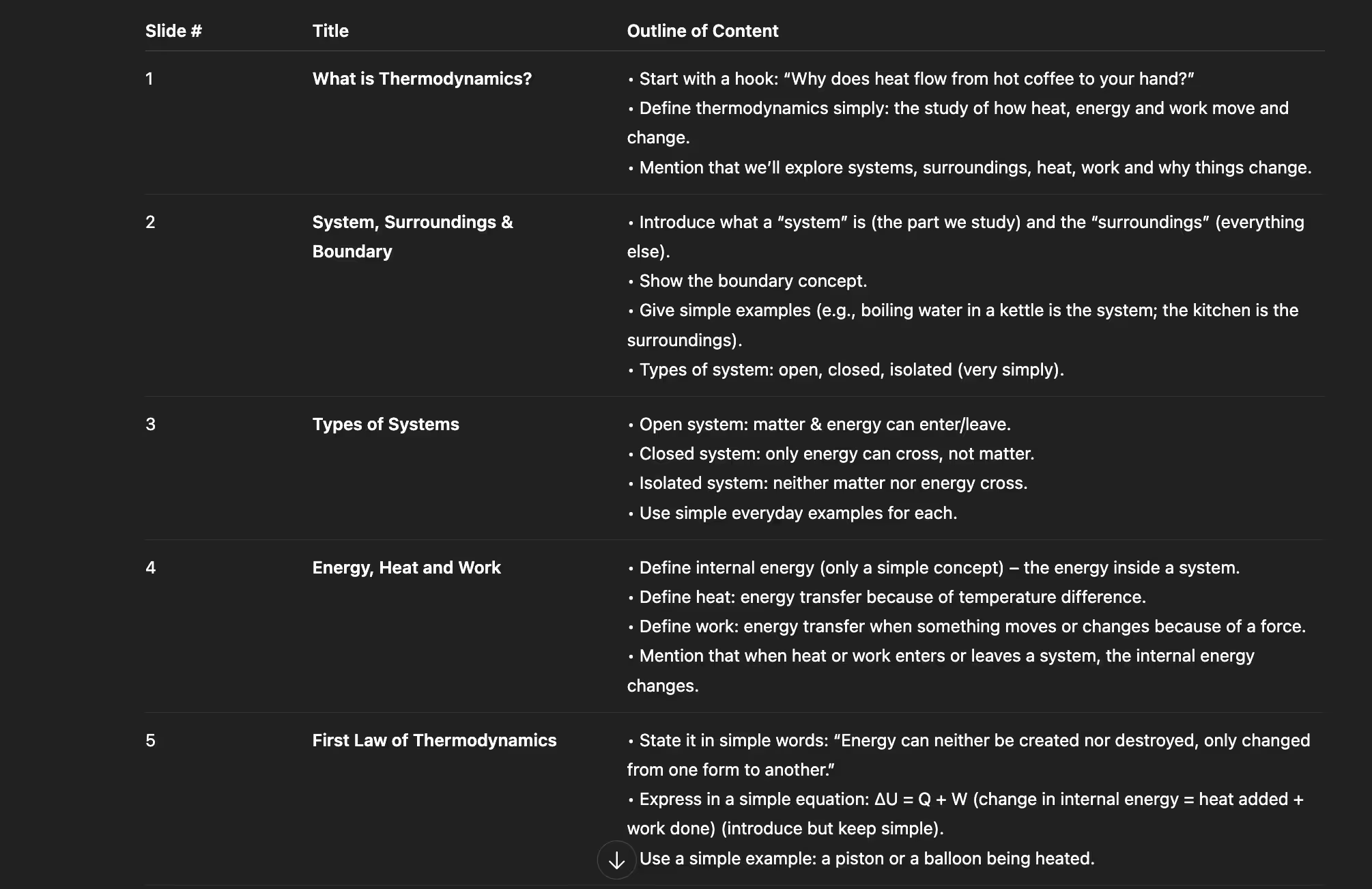
Ask ChatGPT to recommend supporting visuals that can help bring concepts to life.
Prompt: "Suggest images, diagrams, or charts that can be used on the slides to illustrate laws of thermodynamics."
You may get some diagrams like these:
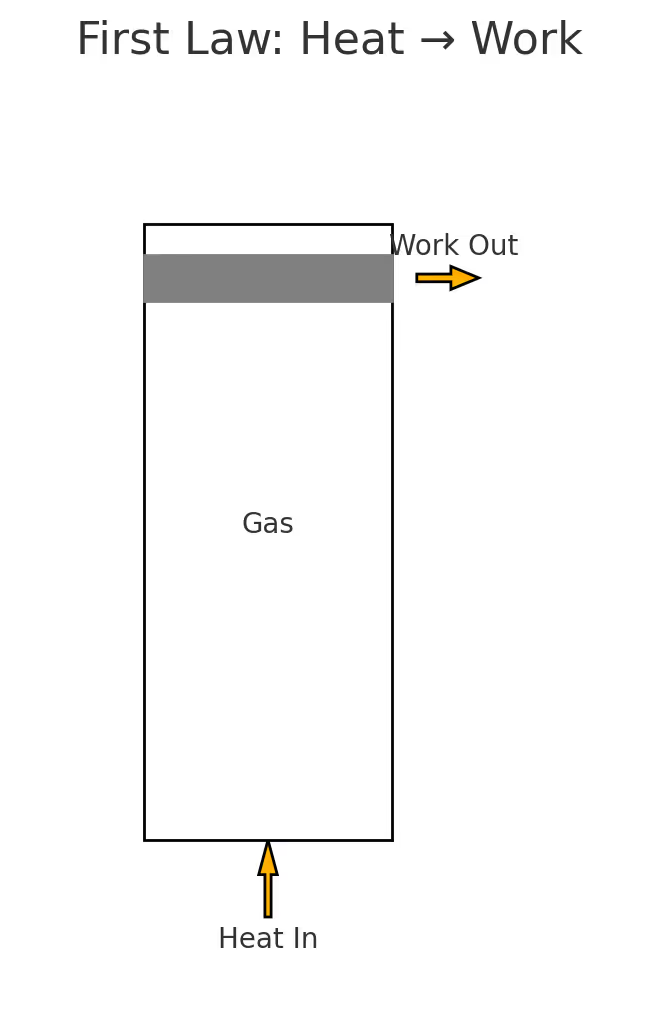
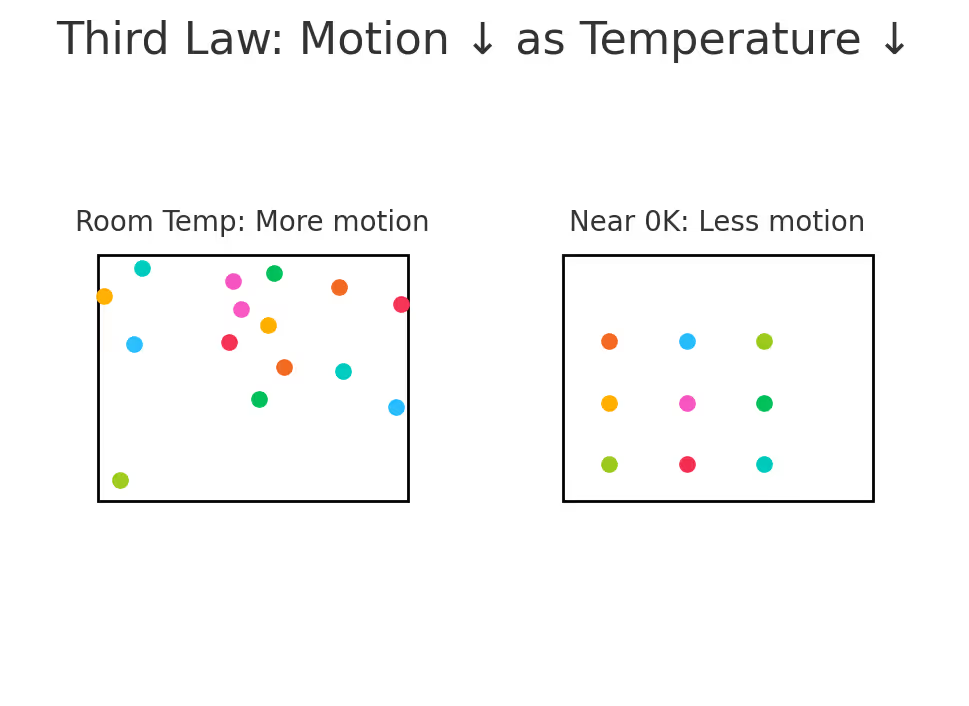
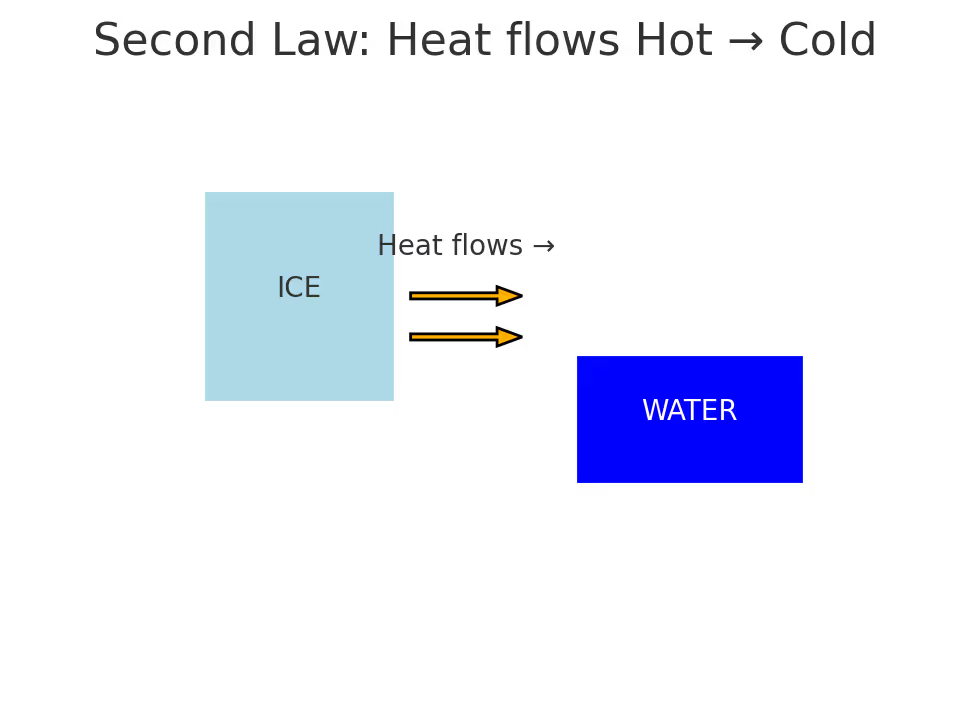
Note: You may need to prompt ChatGPT a couple of times to create diagrams like these. Then, you also need to edit these if you want to make any changes in the terminology or colours. This may take more time.
Include questions or small activities to keep students engaged throughout the lesson.
Prompt: "Include 2-3 questions or interactive activities (e.g., small group discussions or short quizzes) that will engage Grade 7 students on Thermodynamics."
You may get these quizzes as a response:
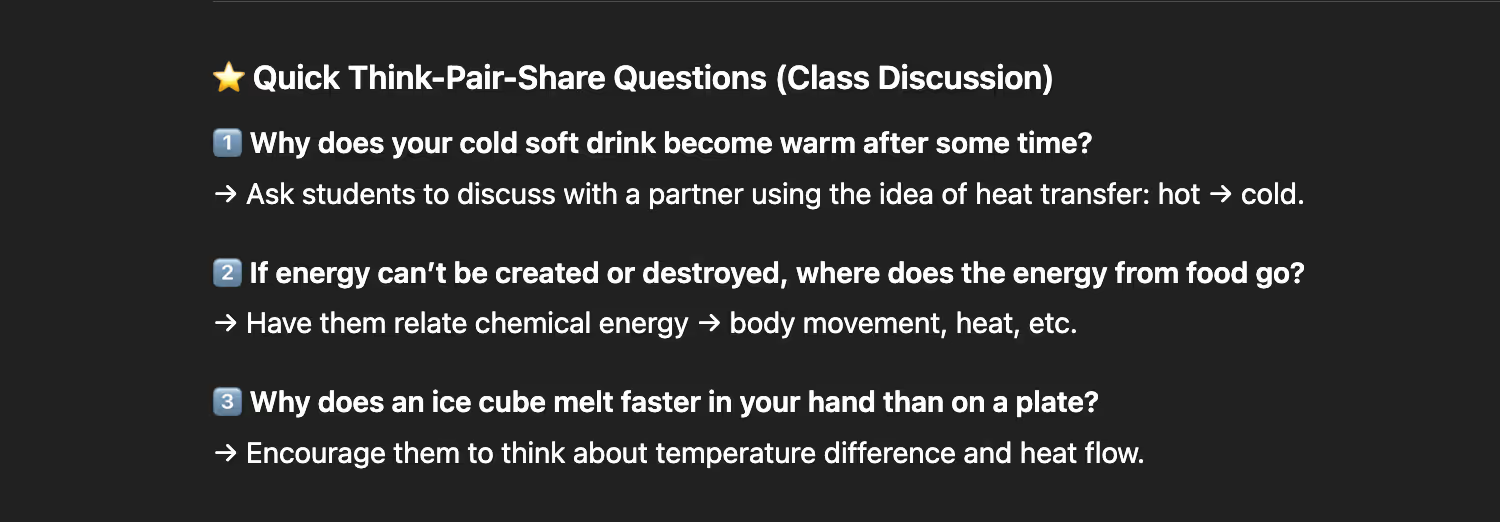
Encourage students to explore the topic further through curated study resources.
Prompt: "Suggest some additional educational videos, articles, or study materials on Thermodynamics that students can use for self-study. Focus on resources that are appropriate for Grade 7 learners."
ChatGPT will suggest some videos and articles along with their public links:
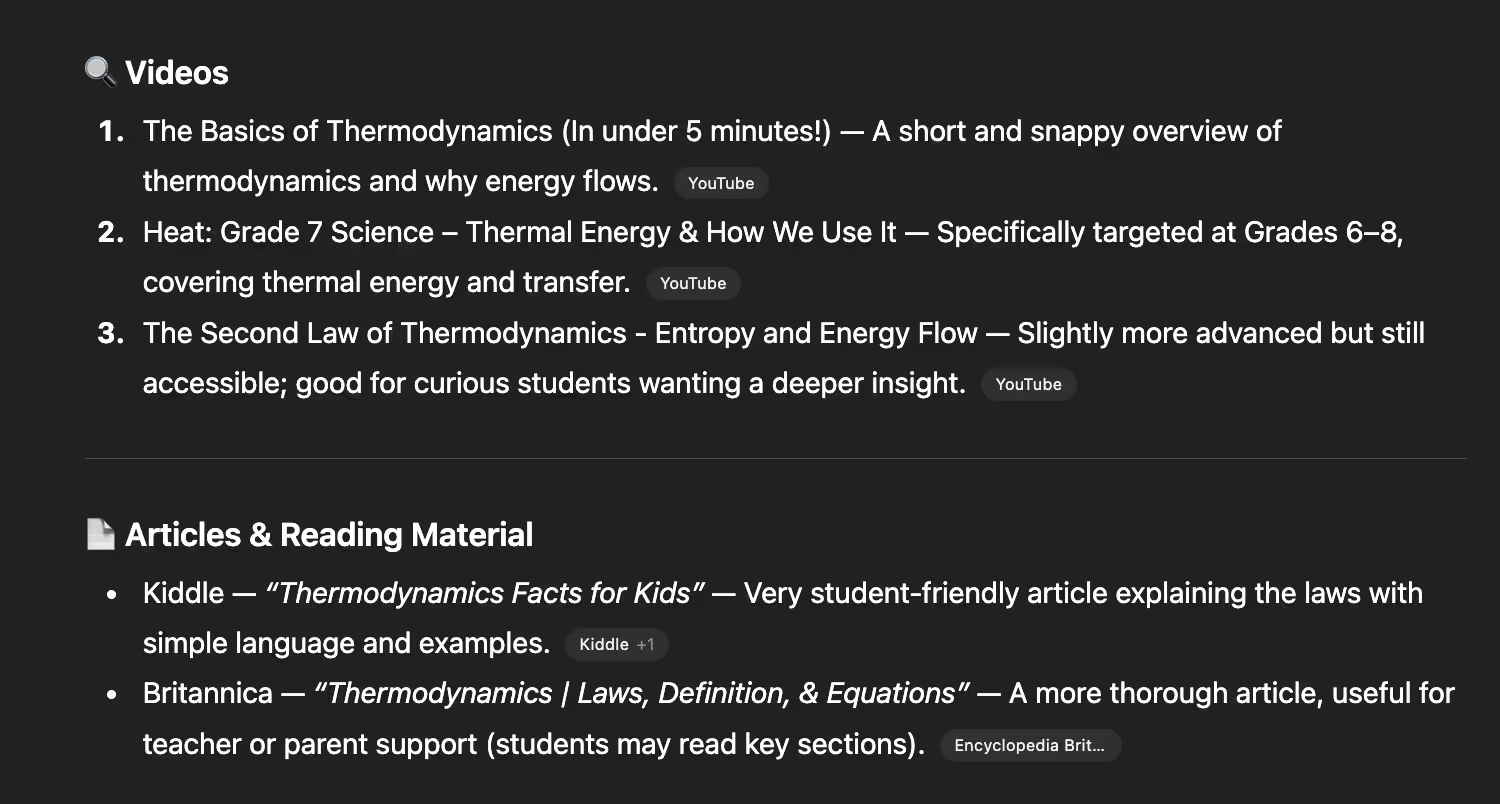
Once you’re happy with the content, ask ChatGPT to format and export the slides.
Prompt: "Turn the whole presentation into a downloadable PPTX file and give me the download link."
ChatGPT will share a link to download the presentation:
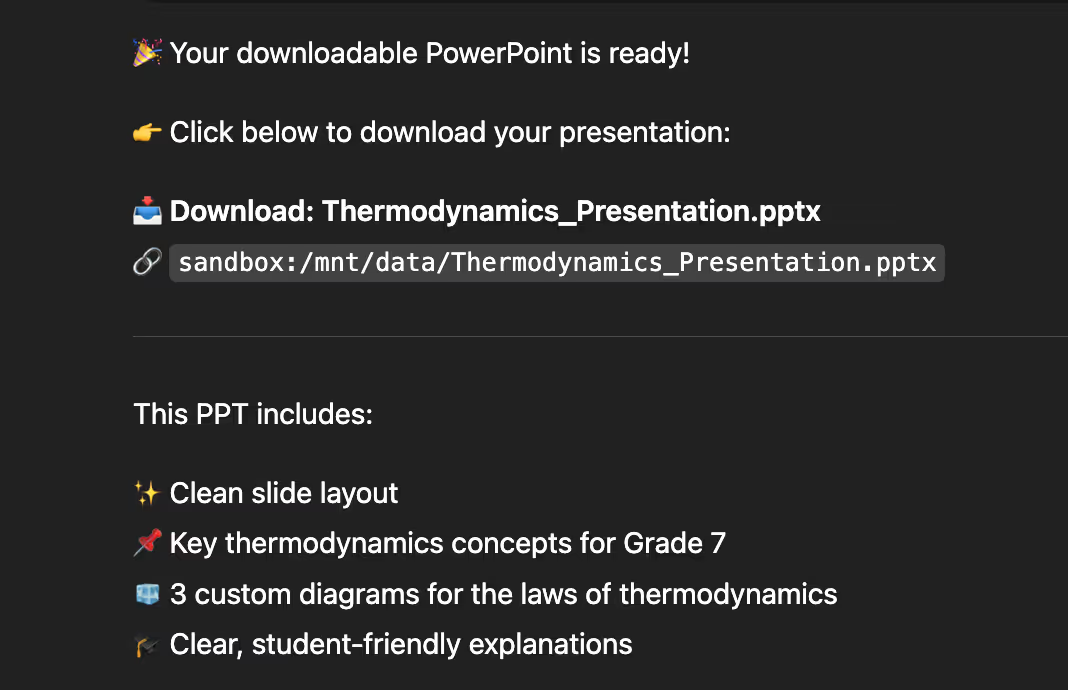
This whole process took me 20 minutes with a basic level of editing. If you want to customize these questions based on textbooks from your school, add diagrams from your textbooks or refine the content, it will take additional time.
You can reduce the number of follow-ups by using teaching-focused AI prompts for presentations, which help ChatGPT generate lesson slides faster and with fewer edits.
Turning a YouTube video into PowerPoint slides (YouTube to PPT) can save hours of prep time but to get the most effective lesson decks, it helps to follow a few best practices:
AI presentation tools rely heavily on video transcripts to generate slides. So, it’s better to pick videos with accurate subtitles or closed captions (CC) so the YouTube to slides AI can extract clear, reliable content.
If the captions are auto-generated and inaccurate, you may need to spend extra time fixing errors later.
🎯 Pro tip: Avoid videos with music, background chatter, or fast dialogue. They confuse transcript readers.
Before you hit “generate,” think about who you’re teaching and how long you’ll be presenting.
For instance, a 10-minute classroom discussion might only need 6–8 slides, while a deep-dive lesson could use 12–15.
🎯 Pro tip: If you’re using AI presentation makers from YouTube videos, mention grade level or topic complexity in your prompt (e.g., “for Grade 7 students” or “for visual learners”). It helps the AI fine-tune tone and structure.
AI-generated slides are fast, but not perfect. Before presenting, review each slide for relevance - remove filler, simplify wording, and add examples that match your teaching goals.
🎯 Pro tip: Always check dates, definitions, or data mentioned in the slides. AI can occasionally misread numbers or terms.
University of Southern California advises to use visual elements in presentations to retain attention of the students. They even suggest adding funny cartoons and other attention grabbing elements to slides.
Add relevant images, diagrams, or GIFs to reinforce key concepts, especially for subjects like science or history.
🎯 Pro tip: Use consistent fonts and colors for visual flow. Monsha already optimizes this automatically.
Once your slides are generated, export them to PowerPoint or Google Slides for last-minute tweaks. Add your school logo, rearrange sections, or include discussion prompts.
AI helps you get 80% of the work done but the final 20% makes the presentation truly your own.
🎯 Pro tip: Save both a “teacher version” (with notes) and a “student version” (without notes) for easier distribution.

Even with AI tools that convert YouTube videos into slides, a few simple oversights can affect quality.
AI is fast, but it can’t always judge what’s pedagogically important. If you don’t review or edit slides, students may end up with cluttered or incomplete information.
A 60-minute YouTube lecture can overwhelm both you and the AI tool. Instead, segment it into 10–15 minute chunks and generate slides for each section separately.
Even if it’s for classroom use, you should credit the YouTube content creator. Otherwise you may face issues while sharing decks publicly or uploading them to various platforms.
University of Southern California also suggests adding a maximum of three main points in a slide. Adding a lot of content on one slide reduces readability and may cause students to tune out.
Let’s be honest, teachers don’t have time to spend hours turning YouTube videos into slides.
Between grading, planning, and managing classrooms, the idea of spending another Sunday making presentations sounds exhausting.
That’s why tools like Monsha exist - to give you those hours back.
Paste a YouTube link, click Generate Slides, and in under a minute, you’ll have a clear, structured deck ready to teach from. No formatting. No copy-pasting. Just slides that make sense.
Try Monsha now. It’s free.
The best free YouTube to PPT converter for teachers is Monsha. You simply paste a YouTube link, and Monsha automatically extracts the key teaching points, summaries, and visuals, then converts the video into a PowerPoint (PPTX) or Google Slides file.
Unlike basic converters, Monsha doesn’t just copy the transcript, it actually creates a structured slide deck aligned to grade level, Bloom’s Taxonomy, and lesson objectives.
To convert a YouTube video to slides, paste the link into Monsha’s YouTube to slides AI tool. It analyzes the video, pulls the important concepts, and generates a clean, ready-to-teach slide deck you can edit or export to PowerPoint or Google Slides. This is the fastest way to create slides from a YouTube video without manually summarizing the content.
You can make a PPT from a YouTube video using AI by using Monsha or ChatGPT-5:
If you want a fast, hands-off process, Monsha is the preferred AI presentation maker from YouTube videos.
Monsha converts YouTube videos directly into Google Slides.
You paste a YouTube link, pick your slide count and teaching level, and export the final deck as a PPTX or Google Slides file.
It’s built for teachers, so you also get learning levels, DOK levels, visuals, and editable content, all automatically organized for lesson planning.
If you want to include a YouTube video inside your PowerPoint lesson:
Monsha workflow:
This way, you get a full slide deck created from the video and the actual video embedded for reference.
You can insert a YouTube video in PowerPoint by:
If your classroom doesn’t have stable internet, convert the YouTube video to PPT first using an AI tool like Monsha so you can teach offline.
Yes. ChatGPT-5 and 5.1 can generate PowerPoint (PPTX) files.
You give it a YouTube link or topic, use structured prompts to create slides, and then use:
“Turn the whole presentation into a downloadable PPTX file.”
However, it requires more manual prompting and editing. Teachers who want a faster, clearer workflow usually prefer Monsha for YouTube video to presentation AI generation.
Teachers can convert any YouTube video into a slide deck by using AI tools like Monsha. Just paste the video link, choose your grade level, and the AI will extract key points and build slides for you. This is the simplest way to create a presentation from a YouTube video using AI without manually taking notes or screenshots.
If the video is more than 10–15 minutes, break it into segments. AI tools work best when generating slides for each section separately. This helps you create slides from a YouTube video that are clear, focused, and not overloaded.
Yes. Monsha is built specifically for teachers. It extracts the relevant concepts from any lesson video and turns them into a clean teaching deck. If you prefer more control, you can also use YouTube video to presentation AI workflows with ChatGPT-5 or 5.1.
Monsha offers a free plan that lets teachers convert YouTube videos into slides instantly. It isn’t just a YouTube video to slides converter, it also formats layouts, adds visuals, and lets you customize grade level, tone, and learning objectives.




AI in Education Content
Pooja Uniyal works closely with teachers and schools to understand and guide how AI is being used in real classrooms today. Her work at Monsha focuses on capturing practical teaching workflows and turning them into clear, usable guidance for educators exploring AI in their daily planning.
Join thousands of educators who use Monsha to plan courses, design units, build lessons, and create classroom-ready materials faster. Monsha brings AI-powered curriculum planning and resource creation into a simple workflow for teachers and schools.
Get started for free

.avif)
.avif)