Create clear Exemplar and Answer Keys that show correct answers, strong reasoning, and what quality work is actually expected. Use answer keys for fast checking. Use Exemplars to show students how a complete, high-quality answer should look.
Just share the question or assignment. Monsha creates the exemplar, the answer key, or both - so expectations stay clear for you and your students.
Monsha provides answer keys to your question bank and show what a strong response should look like

Paste the question, task, or expectations you gave students. You can also attach files, links, rubrics, or reference materials so your Exemplar or Answer key reflects the actual assignment.

Select what you want to create: an exemplar, an answer key, or both. If you’re unsure, Auto mode decides per question.Some questions get final answers. Others get full model responses. You don’t have to decide upfront.

Adjust the output based on how you’ll use it. Show full reasoning or only final answers. Your Exemplar or Answer Key stays classroom-ready.
Once it’s generated, you can adapt it to your classroom, reuse it across lessons, and turn it into other teaching and grading resources, without redoing the work.
Build Exemplars and answer keys from the exact materials your students worked with. Start from the question, reading, video, or assignment you actually used in class.


Adjust Exemplars and answer keys based on who will use them and why. Make them student-facing, teacher-facing, simpler, or more rigorous, without starting over.
Turn a single Exemplar or answer key into a stronger teaching or grading tool. Add clarity, surface thinking, or focus only on what matters for the task.
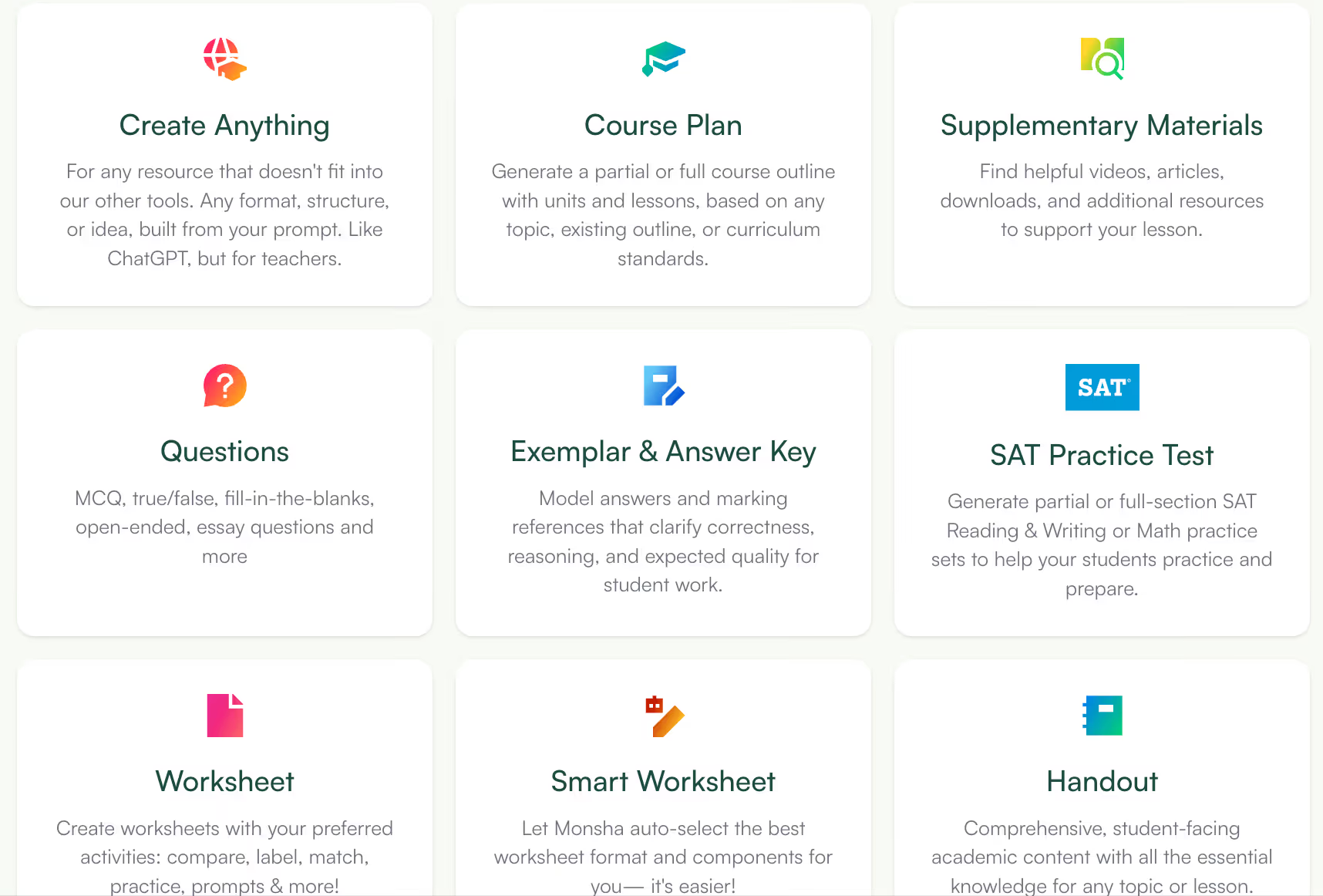
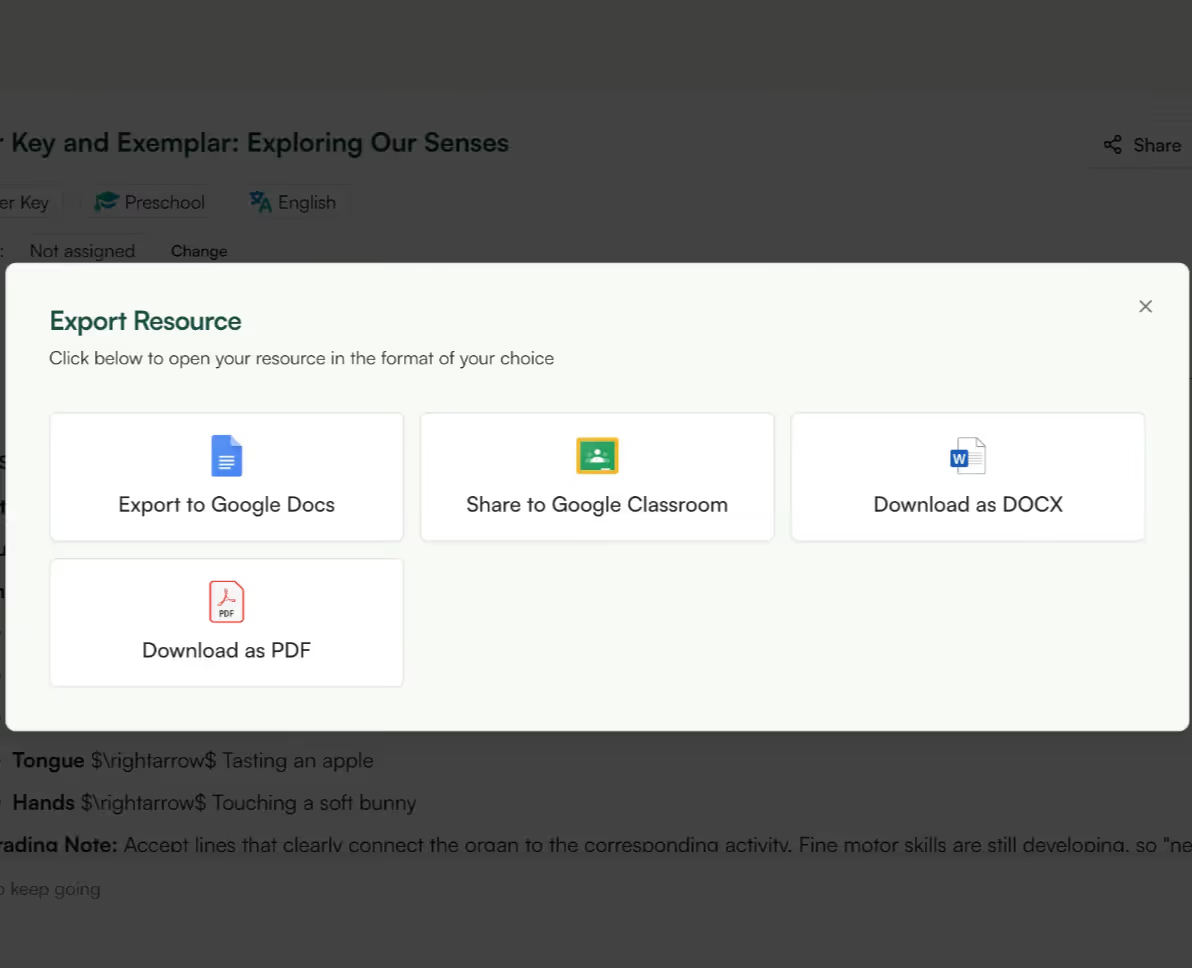
Use your Exemplar or answer key where instruction and grading actually happen. Then reuse it as the foundation for future lessons and resources.
Turn your questions and assignments into reliable Exemplars and answer keys you can reuse, adapt, and share across your classroom.
Try it nowAn exemplar is a clearly annotated sample of student work that shows what high-quality responses look like and helps clarify grading expectations for students and substitutes. It’s used most often to make sure students understand what success looks like on open-ended or performance tasks.
Many teachers make answer keys - especially for multiple choice or short answer items - so they can grade consistently and quickly check student work. Others prefer rubrics for longer responses to encourage deeper thinking. Real classroom discussions show answer keys help with consistency and transparency in grading.
Can exemplars help my students understand assessment expectations?
Yes, exemplars are especially powerful for showing quality work in context, helping students see not just what the answer is but what makes it good. This builds clearer understanding of criteria and reduces confusion about performance tasks.
Should students see the answer key or exemplar before they submit work?
This is debated. Some teachers hold answer keys back so students think independently, while others share them as a learning tool alongside feedback. Either way, answer keys can be a useful reference when used intentionally to support learning rather than replace it.
What’s the difference between an answer key and a rubric?
An answer key usually lists correct answers or detailed solutions for specific questions. A rubric outlines scoring criteria or performance levels for student responses, especially on essays and projects. Many teachers use both together - answer keys for accuracy and rubrics for qualitative feedback.
Why do teachers use exemplars instead of just giving the answer key?
Many educators use exemplars because they show what quality work looks like, not just the correct answer. This helps students understand expectations rather than simply memorize answers.
Is it normal to make your own answer key for constructed responses or essays?
Some teachers make detailed answer keys or rubrics for longer responses to ensure consistency in grading, especially when the “correct” answer isn’t a single response.
Should I give students the answer key before or after they try their work?
Teachers debate this: some share answer keys after students attempt the work to encourage thinking first, while others post them for review so students can self-correct and learn from mistakes.
How can I post an answer key that students won’t just copy and cheat from?
Teachers often look for ways to share answer keys (e.g., interactive formats or delayed posting) that support learning without encouraging copying or low-effort work.
Do answer keys really help students learn, or just help with grading?
Some educators ask whether answer keys support student learning or mainly serve the teacher’s grading efficiency - especially when students “still get it wrong even with the answer sheet.”

Palm Beach County School District, Florida

I’ve been speaking to everyone about the ease of your site. I enjoyed the fact that there were different question types and that you were able to modify the question levels or styles without much effort. Using it almost every day to redo and update assignments.
I really am enjoying Monsha and can’t wait to spread the word about it.

Central Holmes Christian School, Lexington, MS
I use Monsha a lot. Sometimes I even feel like I’m bothering y’all with how often I’m on it 😅 but I really appreciate this app so much. Even during summer break, I’m using it to get ahead on lessons for next year.
.avif)
Ohse Home School, Oklahoma
I love this platform - this has made homeschooling easier for me from planning lessons to creating spelling, reading and English worksheets.
It's been a life-saver for my school year no matter what your religion may God bless you all!

Zenith International School, Malaysia
Your presentation content is great based on the pdf file I provided. I teach maths in my case i needed to make presentation more interesting for the kids, not boring blank pages with text. Like artworks, graphics or real images that relate to my subject. Thank you for that 😍

Professional Learning Developer
This tool is fantastic! This really makes it more of an all-in-one-stop shop for me now that you've added the PPT tool upon my request.
It is very intuitive as far as the prompt is concerned. And I like the options to add links, content, previous resources, and especially the YouTube feature.

High school math teacher in the US
The worksheets look great. Thank you so much for taking care of this, it's so rare to find a resource that works with latex for math! I'm thrilled!

Khuangnapittayakun School, Thailand
I can create an entire course to include grading rubric within minutes when before it would take me weeks.
In S.E. Asia, the resources are whatever teachers can pirate but Monsha has changed that for me.. now I can create and enjoy the task for a change.

Italian teacher and trainer
Monsha was a wonderful discovery, and I always recommend it in my AI training courses!
The tools they offer are all very effective, but my favorite is "Comprehension Questions," one of the best I've tried across various platforms! Great work!

Maths Teacher, The Teach for Nigeria
I've shared this tool to my colleagues here in Nigeria and they are already falling in love with it.
I actually do use Monsha for everything. From baseline assessment to lesson planning to formative evaluations and of course to summative assessment.

English Teacher, Educación de la prov. Argentina
I was fortunate to chat directly with you guys (creators). Every suggestion I shared was received with enthusiasm, you worked on it and got back sincerely.
I have been impressed with how you improve it based on the actual needs of educators. And kept it clean and simple.
Join thousands of educators who use Monsha to plan courses, design units, build lessons, and create classroom-ready materials faster. Monsha brings AI-powered curriculum planning and resource creation into a simple workflow for teachers and schools.
Get started for free
